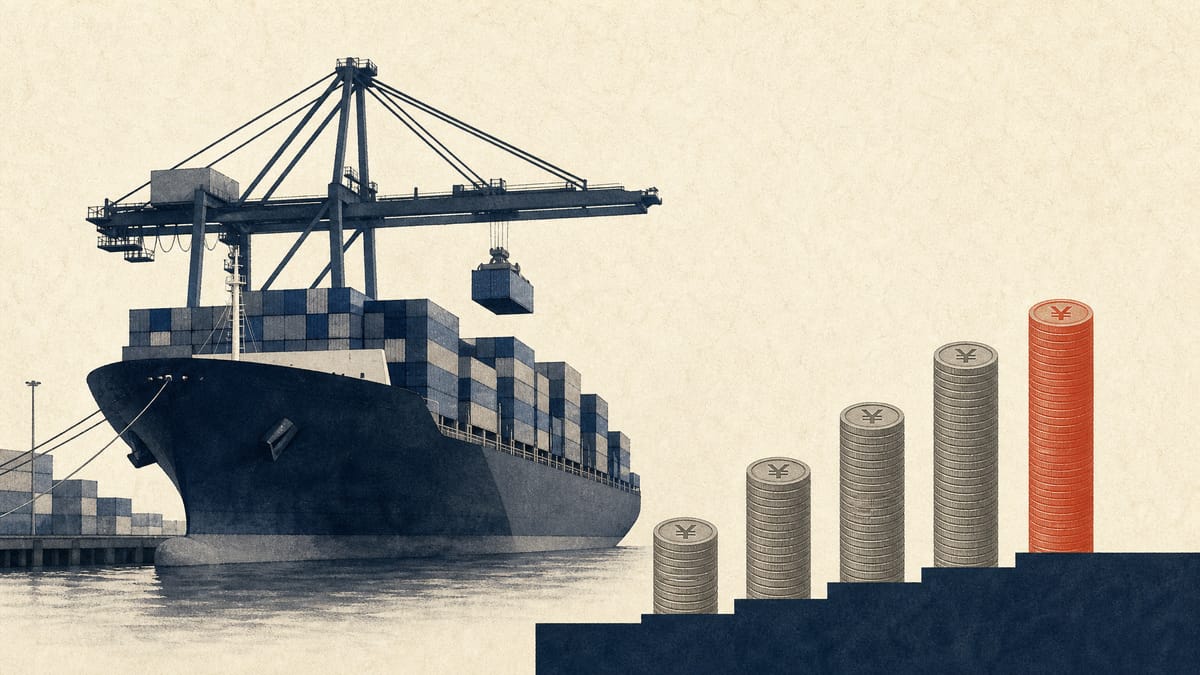
Nippon Yusen Kabushiki Kaisha told the Tokyo Stock Exchange on August 5 that it is raising its dividend forecast for the year ending March 2027. The shipping group lifted both its interim (second-quarter-end) and year-end dividend forecasts by ¥20 each, to ¥120 per share apiece, up from the ¥100 per share it had pencilled in when it first issued guidance on May 11. That takes the full-year dividend forecast to ¥240 per share, against an initial plan of ¥200 and above the ¥230 per share the company actually paid for the year ended March 2026.
The increase follows the company's own payout framework rather than a one-off gesture. Nippon Yusen says it targets a consolidated payout ratio of around 40%, with a floor of ¥200 per share a year, and decides the final split after weighing its earnings outlook; it also reserves the option to add share buybacks depending on investment opportunities and the broader business environment. The dividend revision was published alongside an update to the company's full-year earnings forecast on the same day, which the company cited as the basis for the higher payout.
For shareholders, the numbers are straightforward: two equal step-ups of ¥20, arriving at a round ¥240 annual dividend, comfortably clear of the ¥200 floor the company has set for itself. The next test is whether the improved earnings backdrop cited in the notice holds through the rest of the fiscal year, since the policy ties future payouts to results rather than locking in this year's figure as a new baseline.