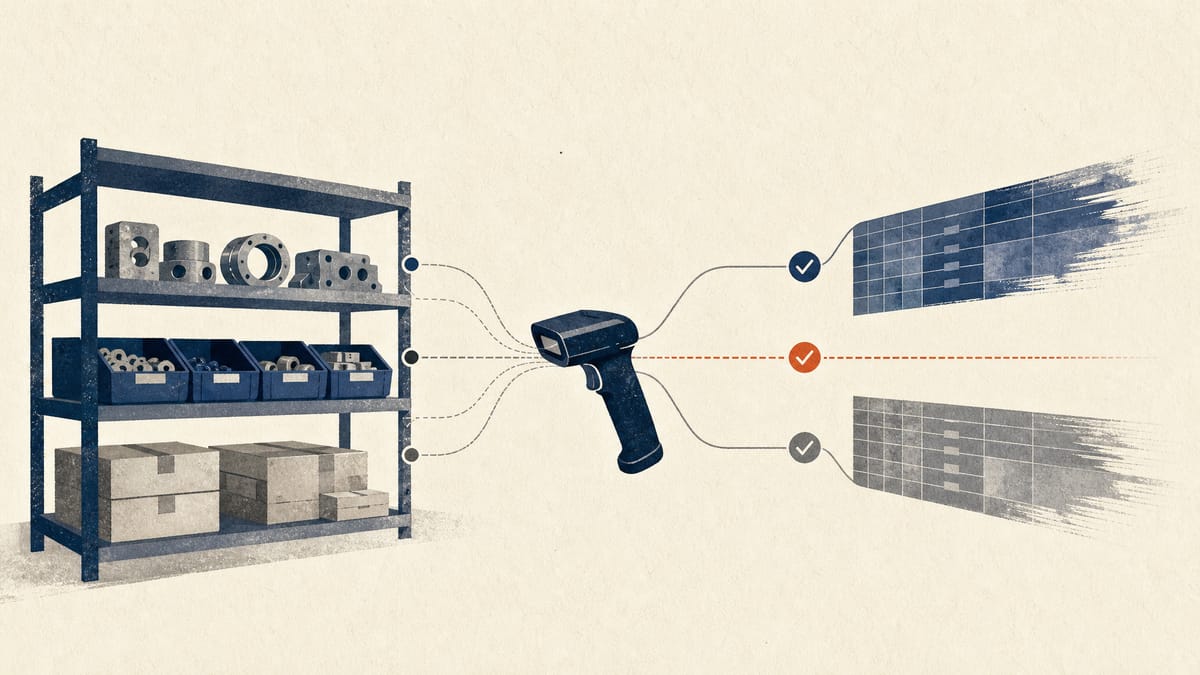
NEPON says its financial-reporting controls were effective at March 31 2026, after remediating a material weakness it had disclosed at the previous year-end. The more revealing part of the filing is the fault itself: data used to calculate weighted-average unit costs for parts inventory were not being updated correctly in a Microsoft Access database from the year to March 2019, leaving inventory understated across prior periods.
According to the report, the problem surfaced after the company questioned the historical trend in inventory values during the latest fiscal year. NEPON says data held in its core system were not correctly refreshed into Access tables, and the periods used in Access queries were also not updated properly. It traced the error to weak risk assessment around financial reporting, incomplete documentation of the calculation and checking steps, and the fact that its internal-control audit had overlooked the process.
The remedy is detailed, which is usually a better sign than a vague promise to tighten procedures. NEPON says accounting staff must now verify that Access table updates and query periods match the core system, compare Access-generated unit costs with separately calculated theoretical values, investigate and record any gap, and obtain manager approval. It also says it reviewed all business processes to confirm that risks and responses are properly documented.
| Metric | Year to March 2026 | Year to March 2025 |
|---|---|---|
| Net sales | ¥7.42bn | ¥7.28bn |
| Ordinary income | ¥78.6mn | ¥73.4mn |
| Profit attributable to owners of parent | ¥37.7mn | -¥283.5mn |
The annual securities report shows why the repair matters. For the year to March 2026, NEPON reported sales of ¥7.42bn, ordinary income of ¥78.6mn and net profit attributable to owners of ¥37.7mn, after a ¥283.5mn loss a year earlier. Sales in the prior year were ¥7.28bn and ordinary income ¥73.4mn, so the income statement looks steadier, if not dramatic. Total assets were ¥5.89bn, net assets ¥2.44bn, and the equity-to-asset ratio 41.5%.
For outside investors, lenders and auditors, that is the real signal. When inventory accounting goes wrong, asset values, working-capital trends and earnings comparisons all become harder to trust, even before anyone asks how elegant the software stack is. The filing says one consolidated subsidiary was excluded from company-wide control testing because it was judged immaterial, while detailed process testing covered business locations representing roughly two-thirds of budgeted consolidated sales and focused on sales, receivables, inventory and fixed assets. What the selected evidence still does not provide is a yen value for the historic understatement or an explicit statement on whether prior periods were restated.