Japan's cabinet resigned en masse at a cabinet meeting held earlier the same day, and the outgoing Economy, Trade and Industry Minister used his final post-cabinet briefing to draw a line under roughly a year in office, framed around three crises his successor now inherits.
The tariff bill still to be paid
The minister said Washington had been preparing tariffs exceeding ¥5tn on Japanese goods before the two governments settled on a deal cutting that threat by more than ¥2tn. The relief is not unconditional. It rests partly on the Japan-US Strategic Investment Initiative, under which the two governments have already announced six projects meant to serve "mutual benefit, economic security and growth." He was blunt about the downside: fail to carry out the initiative in good faith, he said, and a renewed US tariff increase is exactly the reaction to expect. Whoever takes his chair inherits that obligation.
| Issue | Key figure | Status |
|---|---|---|
| US tariff agreement | Threatened tariffs over ¥5tn cut by more than ¥2tn, with the investment initiative (six projects announced) among the deal's premises | Continued execution now falls to the incoming minister |
| Kumamoto earthquake | ¥14.6bn support package for facility repair, financing and infrastructure recovery | Rebuilding described as an ongoing effort, no timeline given |
| Middle East fuel relief | Subsidy reaches ¥51 per liter from September 17, the highest since the scheme began | Exit terms and support level still under review |
Kumamoto's unfinished rebuild
The second crisis was the Kumamoto earthquake. METI assembled a ¥14.6bn support package covering facility and equipment repair, financing and infrastructure recovery for affected businesses, after the minister toured the region and found small manufacturers' earthquake preparedness "clearly inadequate," with heavy shelving left unbolted on factory floors. He called rebuilding livelihoods and workplaces a task that "will require sustained effort," a caveat that outlives his own tenure.
A fuel subsidy with no confirmed exit
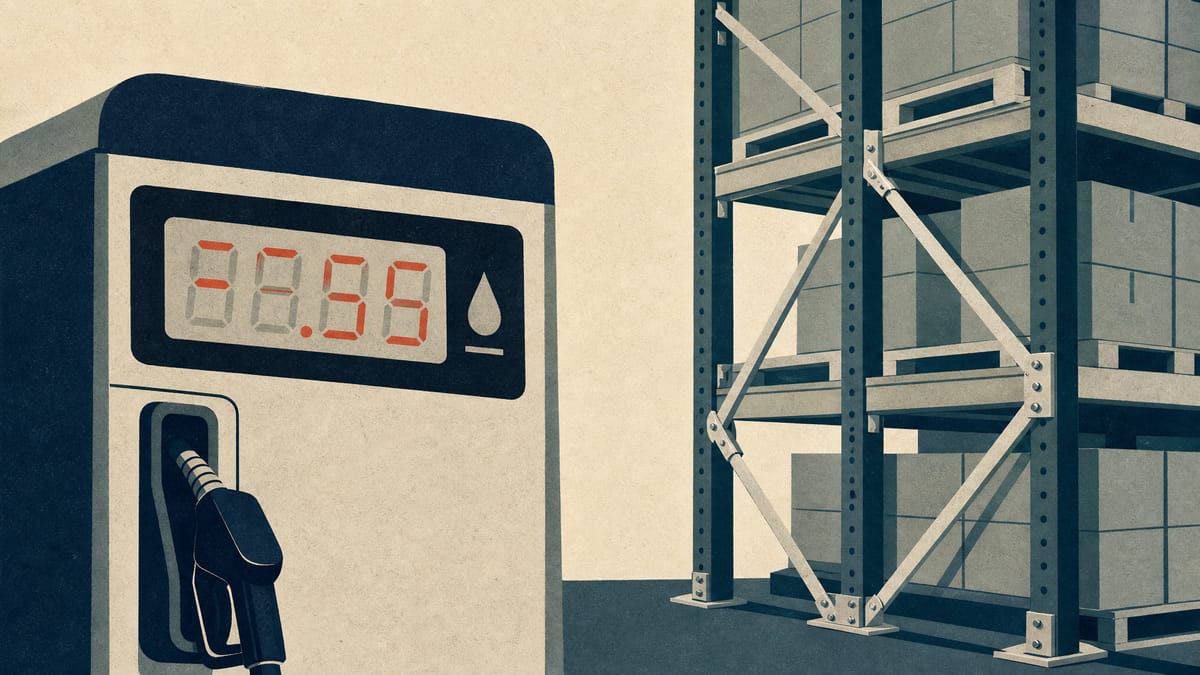
The third crisis, the Middle East, has produced the more immediate bill. Tokyo has run an emergency fuel-price relief scheme funded, since a September 1 decision, from the government's Middle East-related contingency reserve. The subsidy has just hit its highest rate since the scheme began, ¥51 per liter from September 17, aimed at holding retail gasoline near ¥170 per liter even as Saudi Arabia's East-West pipeline remains under repair, following reports of an attack that halted oil loadings at a Saudi port. The minister insisted the exit remains undecided, saying the support unit price and the wind-down of the measure are still being weighed as ruling-party lawmakers push for flexibility tied to how the Middle East situation develops.
The rest of the in-tray
The minister also pointed to this year's passage of three industrial-law amendments, covering industrial competitiveness, industrial technology and the Electricity Business Act, and said he fielded roughly 400 Diet questions on them. On real wages, a priority he says he will keep pursuing regardless of his next role, he grouped the gasoline subsidy alongside a one-percentage-point consumption-tax move as tools he believes the current government is prepared to use to keep wages rising in real terms. None of that settles who signs off on the investment initiative's continued execution, or on the fuel subsidy's eventual wind-down, once a new minister takes the post.