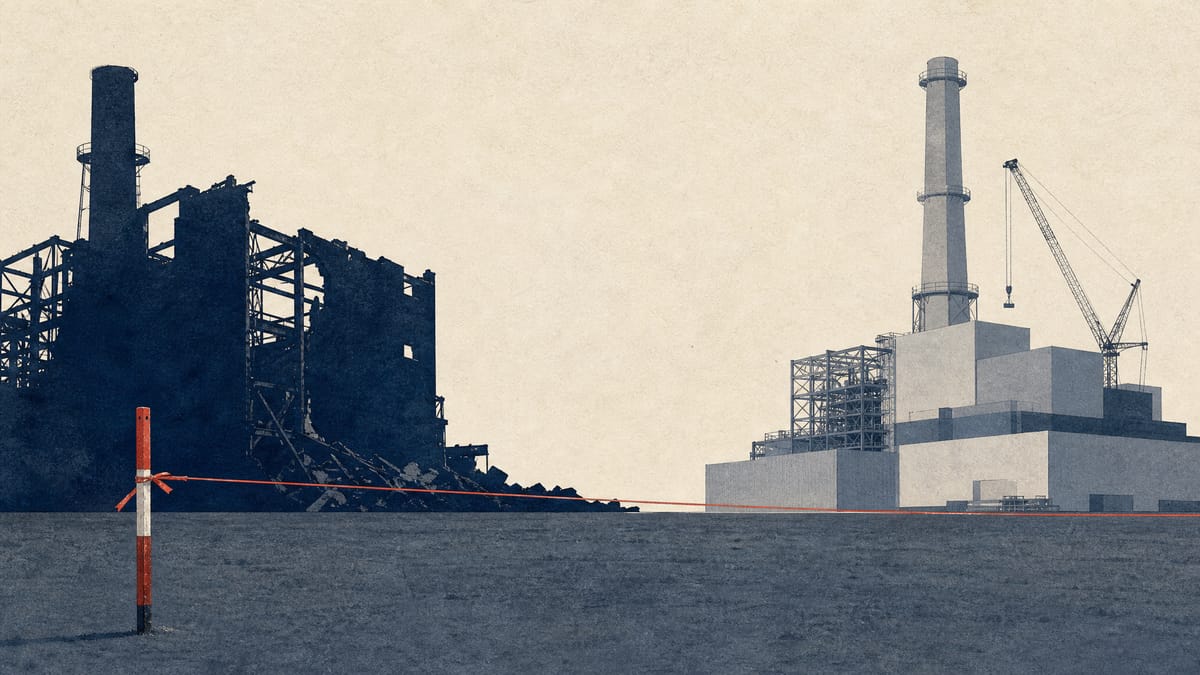
Japan's Ministry of the Environment has drafted numeric thresholds that decide whether a company rebuilding a thermal, geothermal or wind power plant on its existing site gets a lighter environmental review or has to start over as if the project were brand new. The draft cabinet order, open for public comment from August 25 through September 23, 2026, implements a 2025 revision to the Environmental Impact Assessment Act that created a distinct category for "rebuilding projects": schemes that tear down an existing structure and put up a similar one in the same area or nearby.
The thresholds
To qualify as a rebuild rather than a fresh build, the replacement facility must sit within 300 metres of the old structure's site boundary, and its output can only grow so much: up to 2.0 times the retired thermal plant's capacity, 1.3 times for geothermal, and 1.1 times for wind.
| Power source | Distance limit | Capacity ratio limit vs. existing facility |
|---|---|---|
| Thermal power | 300 meters | 2.0x |
| Geothermal power | 300 meters | 1.3x |
| Wind power | 300 meters | 1.1x |
The ministry says the figures came out of a technical working group it convened starting in October 2025. Stay inside those limits and a developer prepares a scaled-down "planning-stage environmental consideration document" that measures the new plant's impact against the retired facility's existing footprint, rather than a full assessment that treats the site as untouched land. Push the replacement further than 300 metres away, or exceed the capacity ratio, and the project reverts to being screened as new construction from scratch.
Dams get their own entry
The draft order also writes dam reconstruction into the enforcement order's appended tables for the first time, alongside the existing rules that only covered new dam construction. Reconstruction projects will be measured against reservoir-area brackets already used for new dams, closing what had been a gap for operators upgrading or rebuilding existing dam infrastructure.
Timeline
The ministry is running a parallel amendment to the underlying ministerial notification on assessment guidelines, so the cabinet order and the notification move together. Comments go through e-Gov, with the official solicitation window closing September 23, 2026. The amendments take effect on April 1, 2027, the date the parent law itself comes into force. For utilities and independent power producers weighing whether to repower an aging thermal, geothermal or wind asset in place, the ratio ceilings now on the table are the number to track before that date.