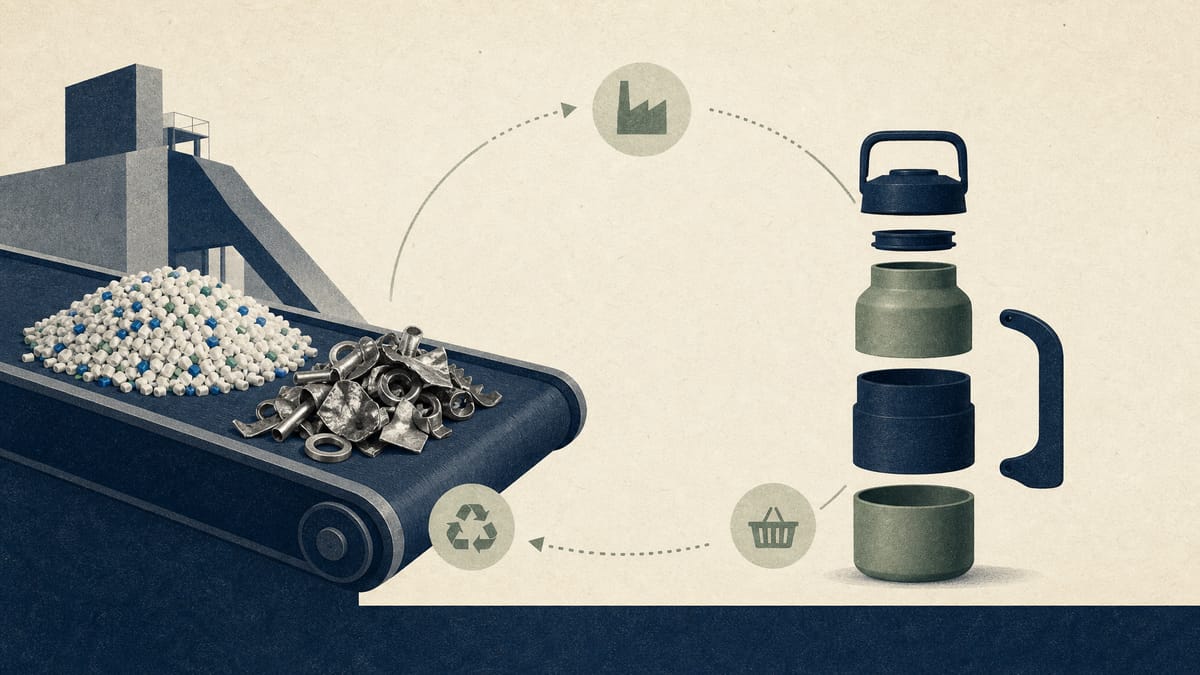
Japan’s latest resource-autonomy subsidy is aimed at operational proof, not just concept work. The programme uses an industry-government-academia circular-economy partnership framework to support projects that can surface technical bottlenecks, test commercial logic and speed the build-out of autonomous resource-circulation systems.
| Feature | What the listing says |
|---|---|
| Objective | Speed the creation of autonomous resource-circulation systems through industry-government-academia partnership projects |
| Eligible applicants | Private enterprises and other indirect subsidy recipients |
| Supported spending | Demonstration projects and equipment investment to clarify commercial viability and technical issues |
| Priority themes | Recycled-material supply, quality and volume; eco-designed products; circular-economy commerce; lifecycle information visibility and sharing |
| Geographic scope | Nationwide |
| Maximum listed amount | Up to ¥40mn |
| Employee-count condition | No employee-count restriction listed |
| Subsidy rate | Refer to application guidelines |
The listing says private enterprises and other eligible indirect recipients can seek support for demonstration work and equipment investment tied to resource-circulation initiatives. That matters because the scheme is not framed as lab-only research. It is trying to back projects that can show whether circular-economy ideas work in practice and as businesses, especially where economic viability or technical hurdles still need to be made explicit.
The priority list is unusually concrete for a short portal summary. It highlights supply systems for recycled materials, including quality and volume, the spread of eco-designed products, growth in circular-economy commerce, and mechanisms to visualise and share information about product resource circulation across the lifecycle. In business terms, the programme is aimed at the plumbing of a circular economy: supply, design, distribution and data, not merely a single recycling step.
The portal metadata suggests a broad opening rather than a narrow pilot. The scheme is listed as nationwide, with no employee-count limit, a maximum listed amount of ¥40mn, and a sector list that stretches from manufacturing and utilities to logistics, retail, finance, education and healthcare. One important caveat, the public listing does not spell out a subsidy rate in the summary and instead tells applicants to refer to the application guidelines.
For companies, the practical signal is clear: projects that combine proof of technical feasibility with a plausible commercial model, especially those linking recyclers, manufacturers and product-data systems, sit closest to the programme’s stated goals. But this notice is still an overview, not the full commercial rulebook. It maps policy direction, while the finer economics remain in the application guidelines rather than the portal summary.