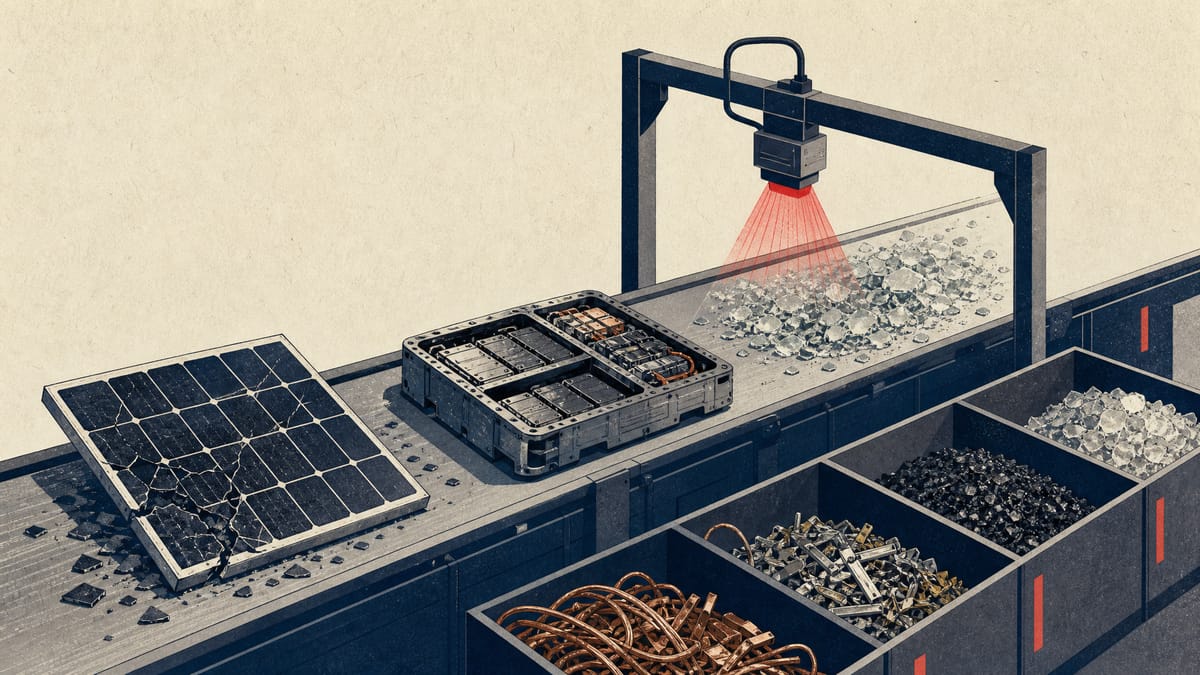
Japan's latest 2026 subsidy programme is aimed at the back end of the renewable supply chain, what to do with solar panels, vehicle batteries and related materials once waste volumes start climbing. The programme backs demonstration projects to build a lower-CO2 domestic recycling system for renewable-energy-related products such as solar panels and vehicle batteries, as well as base materials including glass.
The notice says large-scale disposal of solar panels and vehicle batteries is expected in coming years. It also says substitution away from natural-resource-based inputs has not progressed enough for glass and other base materials because contamination and quality assurance remain obstacles. Add continued demand for automated products, IoT devices and electrified products, and officials see a growing stream of discarded sensors, electronic circuit boards and batteries that still contain useful metals.
In plain English, the state is trying to pay for the hard middle of a circular supply chain: improve recycling technology, lift the quality of recycled raw materials and create a workable route for underused resources back into industry. The programme explicitly targets reuse and recycling of non-ferrous and rare metals contained in those products, while also encouraging substitution for base materials such as glass.
The catch is that this is a programme notice, not an award list. The supplied notice lays out the policy direction more clearly than it does the eventual winners. Still, the message for manufacturers is straightforward: Japan wants more of the energy transition's scrap to become domestic input, not just domestic waste.