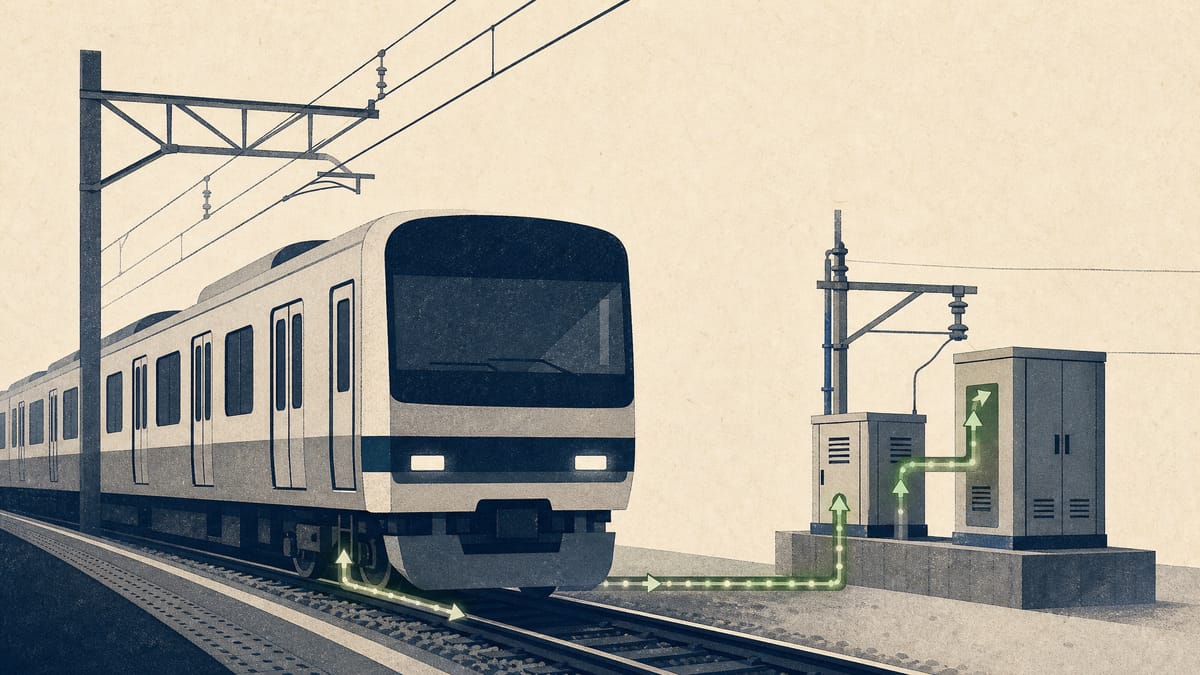
Japan has opened a new subsidy call for railway decarbonisation, and the scheme’s design is more revealing than its bureaucratic title. The programme says it aims to lower railway CO2 emissions by combining two levers, more energy-efficient vehicles and better use of regenerative power produced when trains decelerate. It also says projects need to deliver reliable cuts in energy-related carbon emissions.
The supported equipment categories are grouped into three buckets: regenerative-power measures, vehicle energy-saving measures and other advanced railway energy-saving technologies. The call is being run by the Association for Promoting Sustainability in Local Communities after it received a grant decision under the Ministry of the Environment’s subsidy for carbon-dioxide-emission control measures, specifically a programme to help local public transport shift toward decarbonisation. That makes the notice more than a generic green label. It tells applicants which technology families the programme is prepared to back this round.
For railway operators, that is a practical signal on how to frame capex proposals. The notice does not just invite cleaner trains in the abstract, it explicitly links vehicle efficiency with the effective use of braking energy generated in normal service. For suppliers, the read-through is similar: proposals that connect rolling-stock efficiency with regenerative-power use should fit the programme’s logic better than a one-technology pitch, because the purpose statement stresses a balanced combination of measures. Applications opened on June 23 and the jGrants portal lists July 21 as the deadline.
The portal metadata says the programme is nationwide and that multiple applications are allowed. Still, the public listing leaves key commercial terms for later. It does not state a maximum subsidy amount, and it says applicants should refer to the programme guidelines for the subsidy rate. So this is best read as a live policy and procurement signal for rail decarbonisation, not as evidence that awards have been made. The notice is a call for subsidy recipients, not a winners list.