The Environment Ministry has put out a draft revision to the notification that sets how Japan's odor index and odor emission intensity are calculated. The stated aim is better measurement accuracy. The ministry plans to promulgate the revision around March 2027 and apply it from April 1, 2028.
What would change
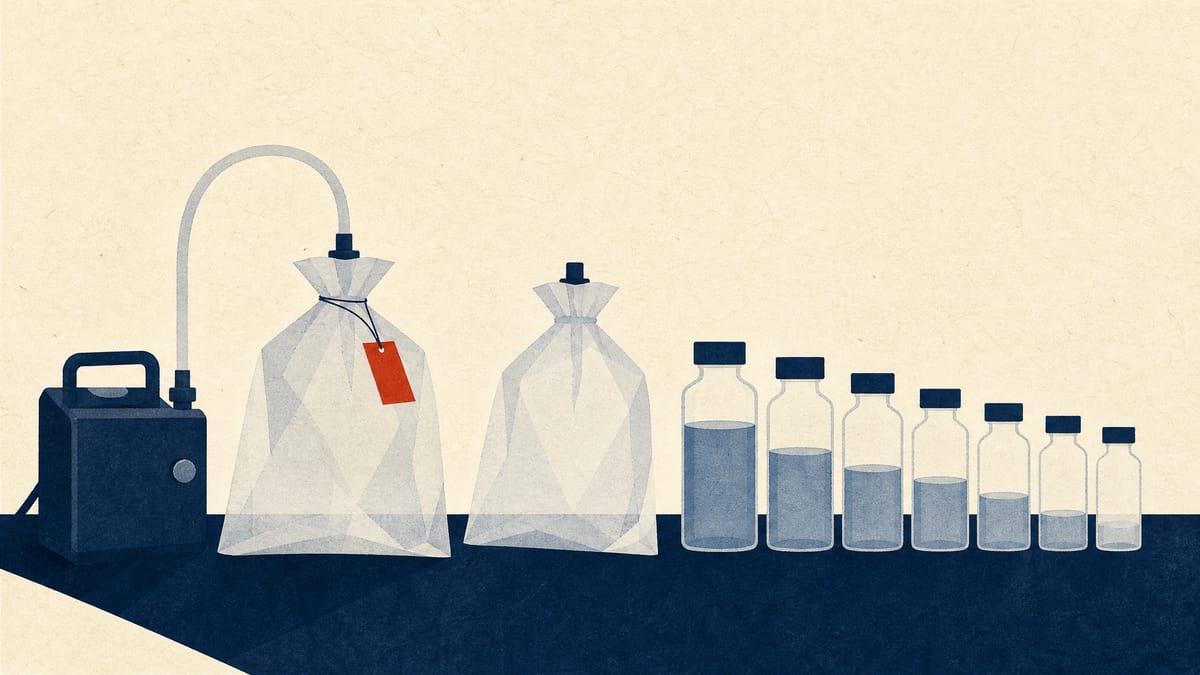
The draft touches equipment, panel testing and the arithmetic. Glass sampling containers, suction devices and sample bags for environmental samples would be specified at roughly 10 to 20 litres, up from about 10 litres. Pump requirements would move from drawing 20 litres a minute of air to being able to draw the required sample within 30 seconds. Odor bags for the judgment test would need an internal volume of at least 3 litres. Glass bottles for effluent samples would be about 50 millilitres to 2 litres, up from 50 millilitres to 1 litre.
The reference odor liquid used to select panelists would change in its gamma-undecalactone weight ratio, from 10^-4.5 to 10^-4.0.
The judgment-test steps for environmental and outlet samples would be merged. Panelists pick the two sample-bearing bags among five, and those who answer correctly face a dilution raised roughly threefold. The index calculation would drop each panel's highest and lowest threshold values. It would also set a 0.55 correct-answer rate as the cut-off when two or more panelists miss at the initial dilution. The odor emission intensity formula would use the unrounded odor index.
Timing and comments
Comments run from October 20 to November 18, 2026, via the e-Gov form or by post, which must arrive by the deadline. The ministry's cover notice says the draft follows this fiscal year's olfactory measurement methods study committee. The legal basis is Article 2, paragraph 2 of the Offensive Odor Control Law and Article 1 of its enforcement regulations.
The overview describes changes to measurement procedure, and the April 2028 date is a plan, not a binding requirement.