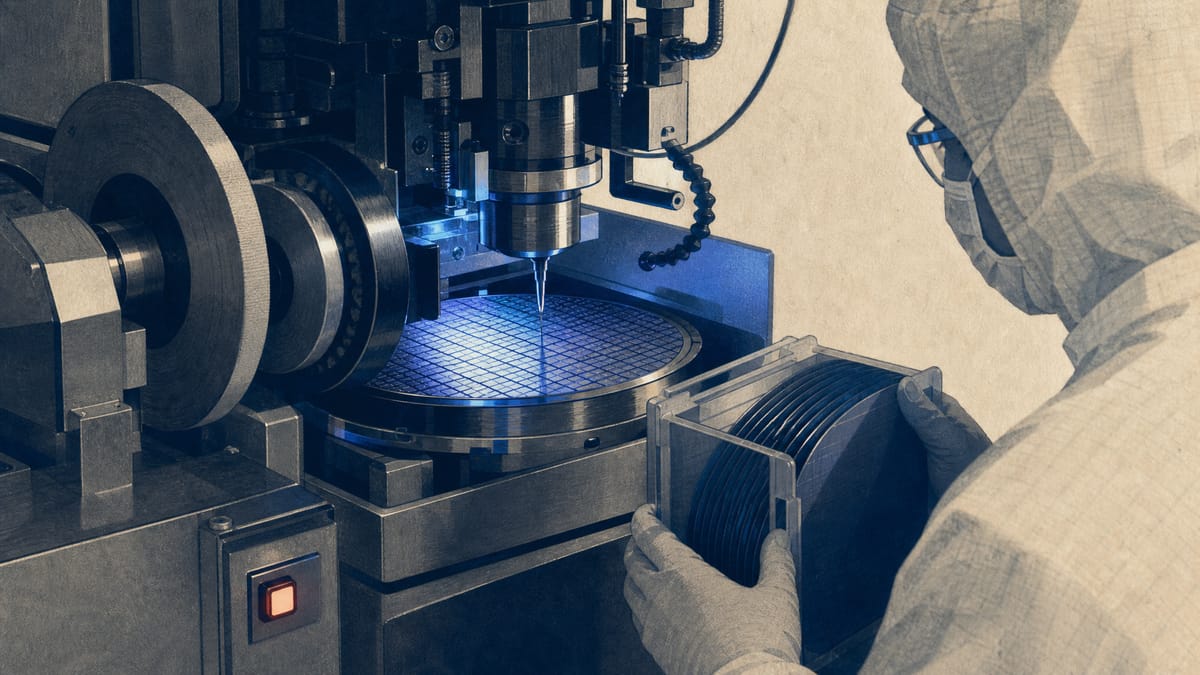
DISCO Corporation, the Tokyo-listed maker of the diamond blades and grinders used to slice silicon wafers into individual chips, said net profit attributable to shareholders rose 44.0% year-on-year to ¥34.2bn in the three months to June. Net sales climbed 27.1% to ¥114.3bn and operating profit rose 42.2% to ¥49.0bn, an operating margin of 42.9%.
The quarter also beat DISCO's own forecast from April: sales came in 7.7% above guidance, operating profit 16.7% above, and net profit 16.0% above. The company was specific about why. Acceptance inspections, the formal customer sign-off that precision-processing machines must clear before a sale counts as booked, "progressed faster than expected," pulling revenue and profit that DISCO had planned to recognise later into the June quarter.
| Metric | April forecast | Actual | Change |
|---|---|---|---|
| Net sales | ¥106.1bn | ¥114.3bn | +7.7% |
| Operating profit | ¥42.0bn | ¥49.0bn | +16.7% |
| Net profit | ¥29.5bn | ¥34.2bn | +16.0% |
That distinction matters for anyone reading DISCO's results as a signal on global chip capital spending. The company did describe demand for its equipment as high, tied to continued data-centre investment behind generative AI and elevated output of advanced logic and High Bandwidth Memory, the stacked memory chips used alongside AI processors. But DISCO attributed this quarter's overshoot against its own numbers to inspection timing, not to demand outrunning what it had already forecast. Shipments, the value of equipment and consumables DISCO delivered to customers, rose 22.3% to ¥135.9bn in the quarter.
With one quarter of hard numbers in hand, DISCO used the same disclosure to open its books on the second quarter for the first time this year. It now expects cumulative sales for April through September of ¥242.8bn, up 24.8%, and operating profit of ¥104.9bn, up 33.0%. The forecast assumes an exchange rate of ¥159 to the US dollar for the July-September months. DISCO discloses guidance only one quarter at a time, citing how quickly customer investment appetite can swing in the semiconductor and electronic-components industry.
The stronger outlook fed straight into the dividend line. DISCO pays out 25% of consolidated half-year net profit as a variable dividend on top of a guaranteed floor of ¥10 per half-year, or ¥20 annually, and it set its interim dividend forecast at ¥171 per share, up from ¥129 a year earlier. The year-end dividend remains undecided.
The same board meeting on July 23 also approved two forms of executive pay tied to DISCO's shares. It allotted 36 stock options covering 3,600 shares to six executive officers, exercisable between August 2028 and August 2034, and issued 3,000 new shares worth ¥205.8mn as restricted stock to the same six officers, with a 50-year transfer restriction running to August 2076. Both grants carry malus and clawback clauses that let DISCO cancel unexercised options or claw back shares if an officer's misconduct forces a restatement of the accounts.
DISCO's equity ratio stood at 77.3% at the end of June, down 1.6 percentage points from March, after inventories rose and pushed total assets to ¥751.2bn. The company gave no indication of when it will disclose guidance beyond the current half, leaving the shape of the rest of its fiscal year, and the durability of AI-linked equipment demand, for the next quarterly filing to answer.