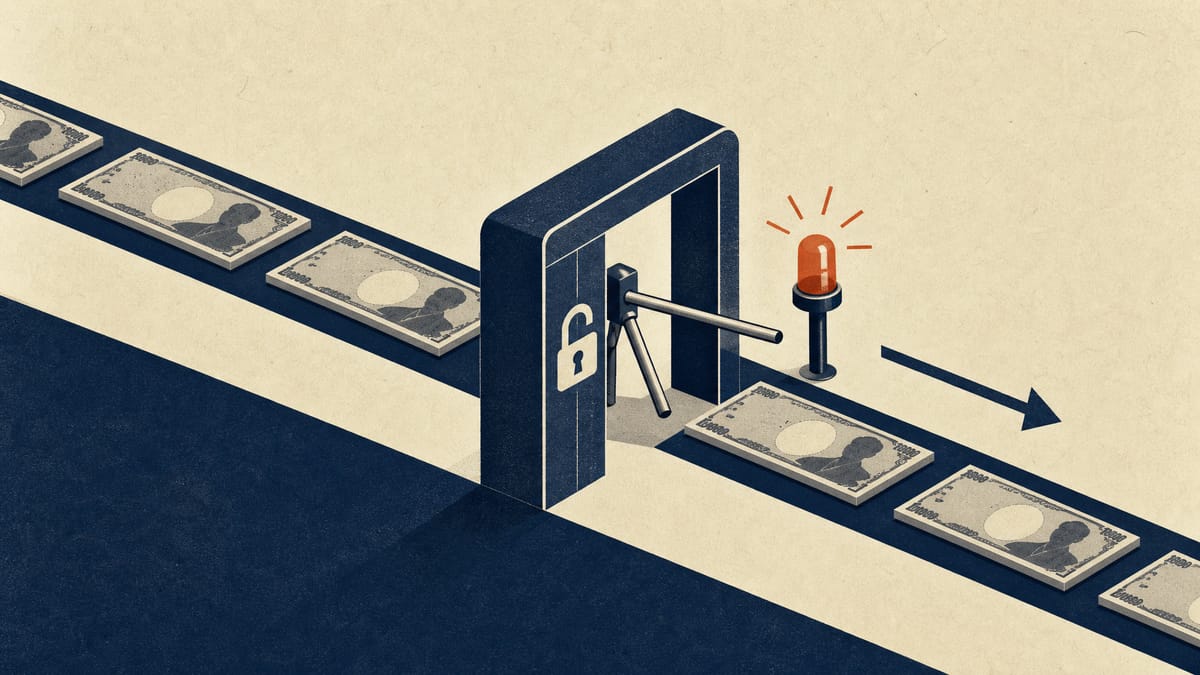
CyberStep Holdings, the TSE-listed operator behind an online-game and entertainment business, told the market on August 28 that its internal controls over financial reporting were not effective for the year to May 2026. The cause was not an accounting error in the ordinary sense but a payment that went out before the paperwork behind it existed.
The company had agreed to buy 3rd Co., Ltd., a contact-center and telemarketing business, for ¥1,250mn, with the share transfer closing on January 14, 2026. Before signing, CyberStep was supposed to finalize a memorandum covering an equivalent deposit payment. Instead, the payment went out before that memorandum was completed, a gap the company now attributes to weak contract-management and payment-approval controls. As due diligence continued, CyberStep grew uneasy about the target's business plan and, in December 2025 and January 2026, signed side letters allowing a price cut and requiring the seller to secure the transfer amount. But the company could not confirm that the secured amount actually existed, nor did it monitor the arrangement effectively.
By July, CyberStep decided unwinding the deal was cleaner than negotiating a discount. The board approved a mutual rescission on July 14, and by July 27 the seller had returned the full ¥1,250mn while CyberStep handed back all of the target's shares, with no plan to reacquire them. After the rescission, the secured amount was reclassified as a temporary payment on the books, but CyberStep could not confirm the secured amount actually existed as of the fiscal year-end and so could not properly judge that payment's nature and collectibility, forcing a correction to its earnings report disclosure. It says the episode carries no material impact on future results now that the cash is back.
The fixes adopted the same day are specific: board approval including outside directors for any investment or capital contribution of ¥10mn or more, a parallel check by the accounting and finance chiefs confirming board sign-off before fund transfers of ¥10mn or more go out, mandatory external due diligence before signing any such investment, payments made only after closing as a rule, and quarterly checks by the finance department on any security arrangement tied to a deal.