Withdrawal after governance collapse
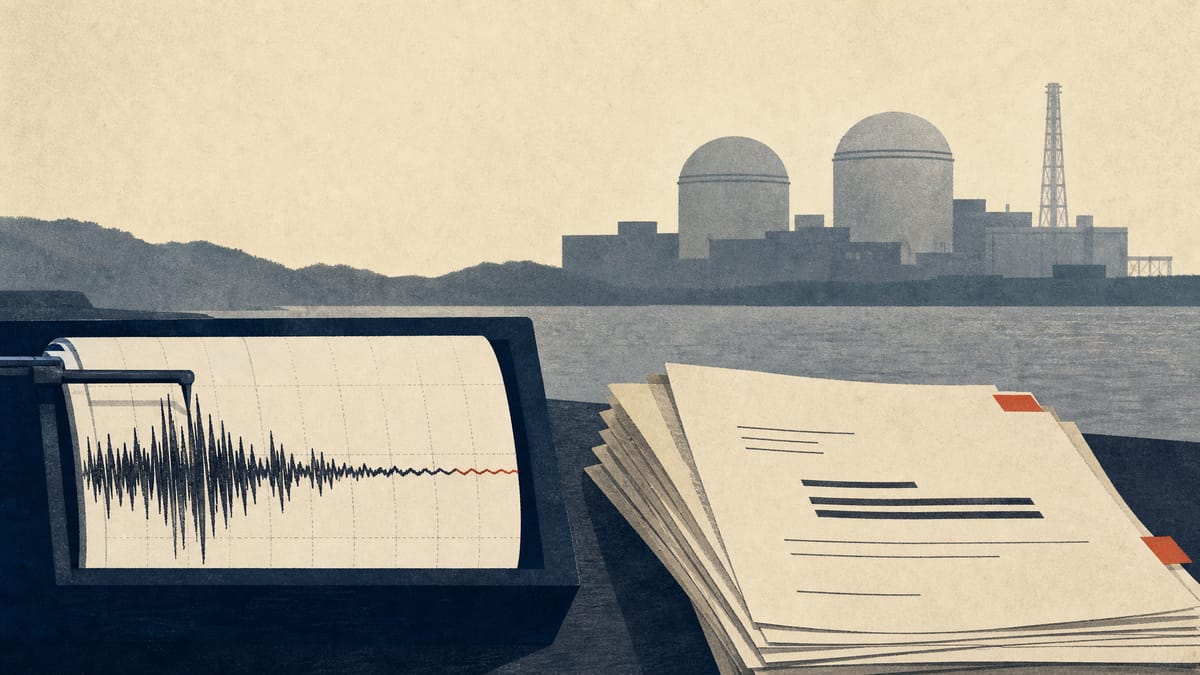
Chubu Electric withdrew its installation-change permit applications for Hamaoka Units 3 and 4 on September 14, a day after publishing its own investigation into an inappropriate incident involving seismic ground-motion data at the plant. The company's president and board chairman resigned as part of the same announcement. Industry minister Akazawa told reporters the leadership change reflects an attempt to "dismantle and rebuild" Chubu Electric's governance and organizational culture after a string of misconduct cases, and called the episode "deeply regrettable" for damaging public trust in nuclear power.
A whistleblowing system that didn't work
The minister's sharpest language was reserved for what happened to internal warnings. Chubu Electric received multiple internal whistleblower reports about the seismic-data problem, and the reporting system simply failed to function, Akazawa said, calling that failure "extremely serious". He is demanding the utility overhaul its internal reporting structure, including whistleblower protection, on top of the broader rebuild pledge, and said the industry ministry will press to see that reform actually carried out.
METI's own leverage sits with a report-collection order already issued under the Electricity Business Act. Akazawa said his ministry will scrutinize Chubu Electric's investigation report and weigh a "maximum strictness" response once it has the utility's formal reply on remediation measures under that order. He gave no timeline or specific range of penalties under consideration.
Restart now off the table for discussion
Asked about Chubu Electric's own statement that it hopes to seek reapplication at Hamaoka at some future point, and what schedule or procedure METI anticipates, Akazawa declined to discuss restart at all. Japan's standing policy ties any restart to the independent Nuclear Regulation Authority certifying compliance with post-Fukushima safety standards and to local-community acceptance, and the minister said the public anxiety generated by the episode means the preconditions for even having that conversation are not currently met. A separate reporter raised a procedural wrinkle Akazawa left open: Unit 3 turns 40 next year, and it is unclear whether a future 60-year extension application is still available once the current permit request has been withdrawn, or whether the more than ten years the reactor already spent under review will count against its operating clock. Akazawa said he had nothing further to add on that question for now.
The 2040 math gets harder
The withdrawal lands next to Tokyo's own numbers. Japan's 2040 power-mix plan assumes total generation rising above 2030 levels while nuclear supplies roughly a fifth of the electricity mix. Akazawa said that, mechanically, hitting a 20% nuclear share at an assumed 80% capacity factor requires 31 to 34 reactors running in the 2040 fiscal year, a level he said remains reachable through NRA-approved restarts, more efficient periodic inspections, longer operating cycles and next-generation reactor development. Whether Hamaoka's two units are counted within that nationwide figure is not stated in the transcript. Chubu Electric has said only that it hopes to seek reapplication at Hamaoka at some future point, without giving a timeline.
| Metric | Figure |
|---|---|
| Nuclear share of 2040 power mix | About 20% |
| Assumed capacity factor | 80% |
| Reactors needed to hit the target | 31 to 34 operating |
| Hamaoka Units 3 and 4 restart applications | Withdrawn September 14, 2026 |
Oil reserves, a secondary worry
Akazawa also fielded a question on the Middle East, where Saudi Arabia's east-west pipeline is currently out of operation. He said Japan holds roughly 200 days of combined national and private crude reserves, with private stockpiles alone at about 95 days, and that most October-bound tankers have already left for Japan. On that basis, he said, no reserve release is needed for October, with later months to be judged as the Saudi repair situation and private procurement develop.