Astroscale Holdings' Japanese subsidiary, referred to in the filing as ASJP, has signed a launch-services contract with the European rocket company Isar Aerospace SE for its next debris-removal mission, ADRAS-J2, the group disclosed on September 1. The board approved the deal on August 28, but Astroscale held the announcement back until Japan's space agency, JAXA, granted permission to publish it, which arrived the same day the filing went out.
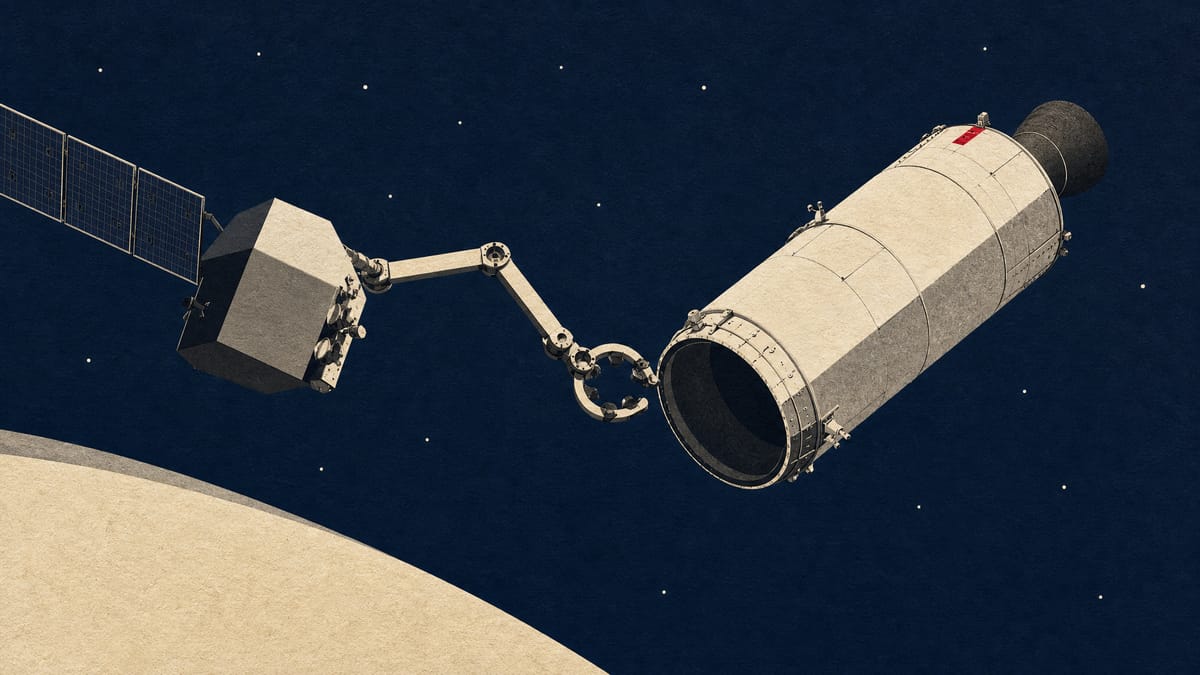
ADRAS-J2 is Phase II of JAXA's Commercial Removal of Debris Demonstration program. The mission will approach, capture and deorbit a roughly 11-metre, four-metre-diameter, three-tonne upper stage from a Japanese rocket, the same object Astroscale's ADRAS-J spacecraft inspected in 2024. That earlier mission proved the rendezvous techniques: closing to within 15 metres of the debris and holding a steady 50-metre observation orbit. ADRAS-J2 is the harder follow-on, actually grabbing hold and pulling the debris out of orbit.
| Mission | Timing | Objective |
|---|---|---|
| ADRAS-J | 2024 | Approached to 15 metres and held a 50-metre observation orbit around the debris |
| ADRAS-J2 | Year ending April 2028 (planned) | Approach, capture and deorbit the same roughly 11-metre, three-tonne rocket upper stage |
Astroscale said the total value of the ADRAS-J2 contract remains ¥12bn, excluding tax, unchanged from before the launch deal was signed. Because that figure was already built into the assumptions behind the group's full-year earnings forecast, the Isar Aerospace contract itself changes nothing in the outlook for the current fiscal year. This is a scope confirmation for work already priced in, not new revenue.
The counterparty, Isar Aerospace, is a launch company founded in 2018 and based near Munich that designs, builds and tests its rockets largely in-house. It now operates across five countries and employs more than 400 people. Astroscale noted that Isar Aerospace has several other launches scheduled before ADRAS-J2 lifts off, which the company says should build a flight record ahead of the mission's planned window in the year ending April 2028, Japan's 2027 fiscal year. Neither the specific launch date within that year nor the launch vehicle or site was disclosed.