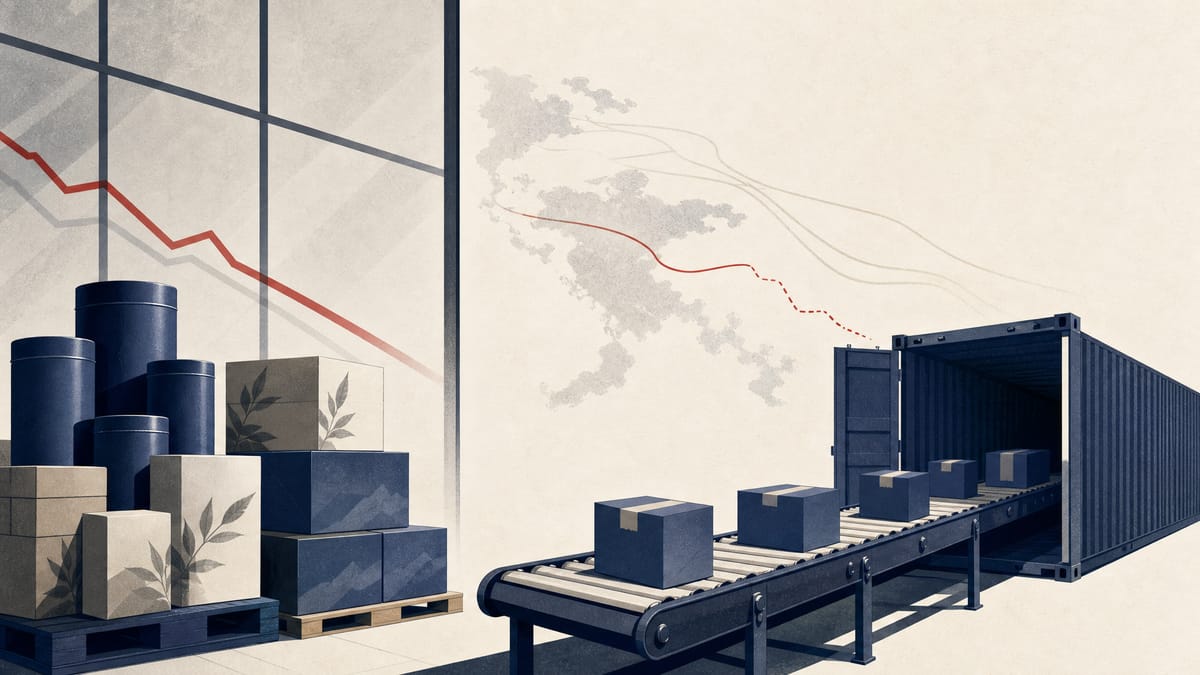
On June 4, Tea Life's board approved a ¥35 million impairment on its overseas wellness business and cut its outlook for the year ending July, taking expected operating profit down to ¥258 million from ¥533 million. The company also cut its sales forecast to ¥11,105 million from ¥11,983 million, recurring profit to ¥271 million from ¥529 million, and net profit attributable to shareholders to ¥188 million from ¥356 million.
The impairment is only part of the story. The bigger change is that management has reset expectations for an overseas wellness push that it had been building through SENN INC., its California subsidiary established in August 2023, and a cross-border e-commerce business acquired later that year. Tea Life said recent US tariff policy and the worsening situation in the Middle East pushed that business below its original plan, prompting a review of profitability and growth prospects. The impairment includes ¥14 million of goodwill, ¥14 million of software and ¥6 million of other assets.
Management's explanation for the broader downgrade was a squeeze on the wellness business from several directions at once. The company said slower growth in TV shopping, a shrinking catalog market and fiercer competition in e-commerce malls hurt sales, while raw-material costs, delivery costs, external mall commissions and upfront spending on the US market weighed on profit. By contrast, Tea Life said its logistics business continues to expand a stable customer base and should still deliver full-year sales and profit growth.
The third-quarter figures already showed that split. For the nine months to April 30, group sales fell 8.2% to ¥7,955 million and operating profit dropped 31.7% to ¥195 million. Within that, wellness sales fell 9.3% to ¥7,232 million and segment profit slid 72.4% to ¥38 million, while logistics sales rose 4.6% to ¥722 million and segment profit increased 6.9% to ¥156 million.
Tea Life left its year-end dividend forecast unchanged at ¥15 a share and said its shareholder benefit program would also stay in place. Management described the impairment as a conservative decision that should reduce amortisation charges from next year and help improve the earnings structure, while also promising faster portfolio optimisation, partnerships and the use of external capital. What remains unclear is how much of the downgrade comes specifically from tariff policy and Middle East conditions, and how much comes from weaker domestic channels, because the company did not break out those effects. Forecasts, as ever, remain management estimates rather than finished facts.