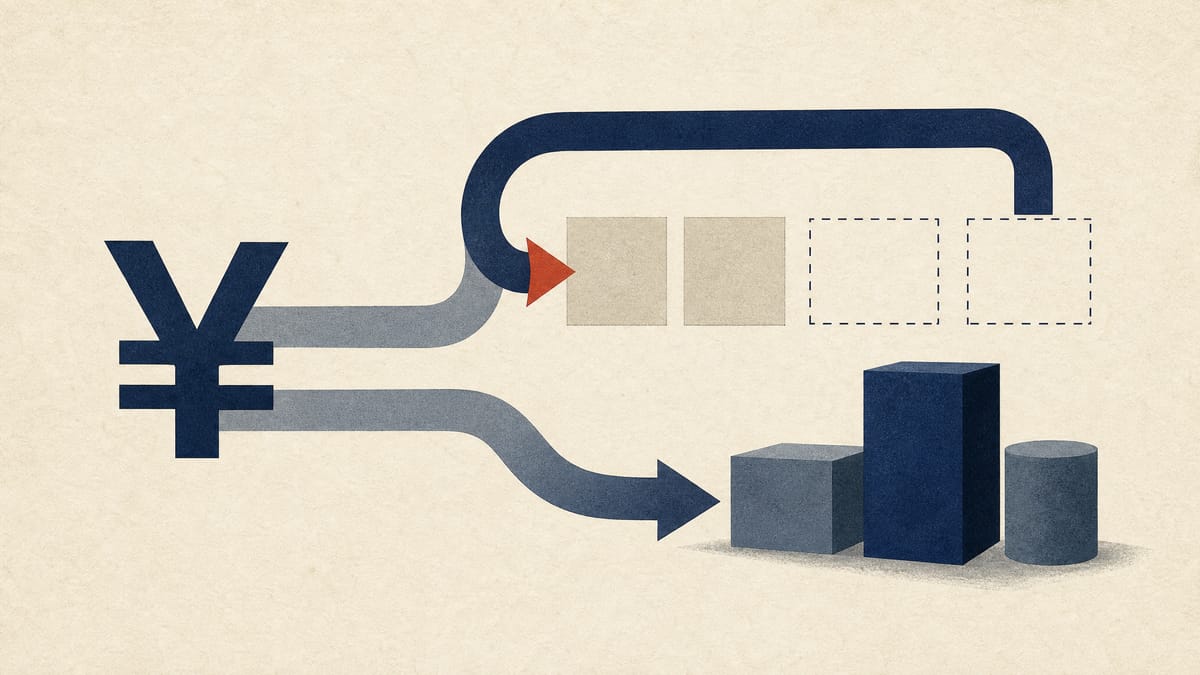
T&D Holdings is launching a fairly plain summer buyback, but the more interesting message is about capital allocation. The board has authorized repurchases of up to 12 million common shares, equal to 2.50% of shares outstanding excluding treasury stock, for up to ¥30 billion between June 8 and September 30. Purchases will be made in the market under a discretionary mandate, and the company says the purpose is to enhance shareholder returns and improve capital efficiency.
A cap, not a promise
The authorization sets an upper limit, not a commitment that T&D will spend the full ¥30 billion or acquire the full 12 million shares. As of March 31, the group had 479,865,829 shares outstanding excluding treasury stock and held 8,134,171 treasury shares, a figure that includes stock sitting in its executive compensation and employee stock-grant trusts. In other words, the program is meaningful, but it is not a dramatic rewrite of the balance sheet.
Why this matters for capital policy
The same day, T&D disclosed a bigger portfolio move: it agreed to sell 85.1% of T&D Financial Life to PayPay and OneIM Indigo, leaving itself with 14.9%, in a transaction valued at about ¥160 billion and scheduled to close on October 1, 2027, subject to regulatory approvals and IFRS-related conditions for PayPay group consolidation. In that filing, T&D said it intends to allocate roughly half of the after-tax funds from the sale to strategic investment and roughly half to shareholder returns through share repurchases, with those repurchases envisaged after the sale is completed.
That makes the current ¥30 billion authorization look less like an isolated gesture and more like the opening line of a broader capital-recycling plan. For an insurer, that is the real signal: T&D is explicitly linking shareholder returns to funds generated by reshaping the group, while keeping room for new investment.
What remains uncertain
Two caveats matter. First, the T&D Financial Life sale is still some distance from closing, and the disclosed transfer value is only an estimate that can be adjusted under the share transfer agreement. Second, T&D said its proceeds-allocation policy is based on an assumed after-tax amount calculated as if all of its T&D Financial Life shares were sold, even though the announced closing structure leaves T&D with a 14.9% stake. So the summer buyback is real as an authorization. The larger buyback story still depends on execution.