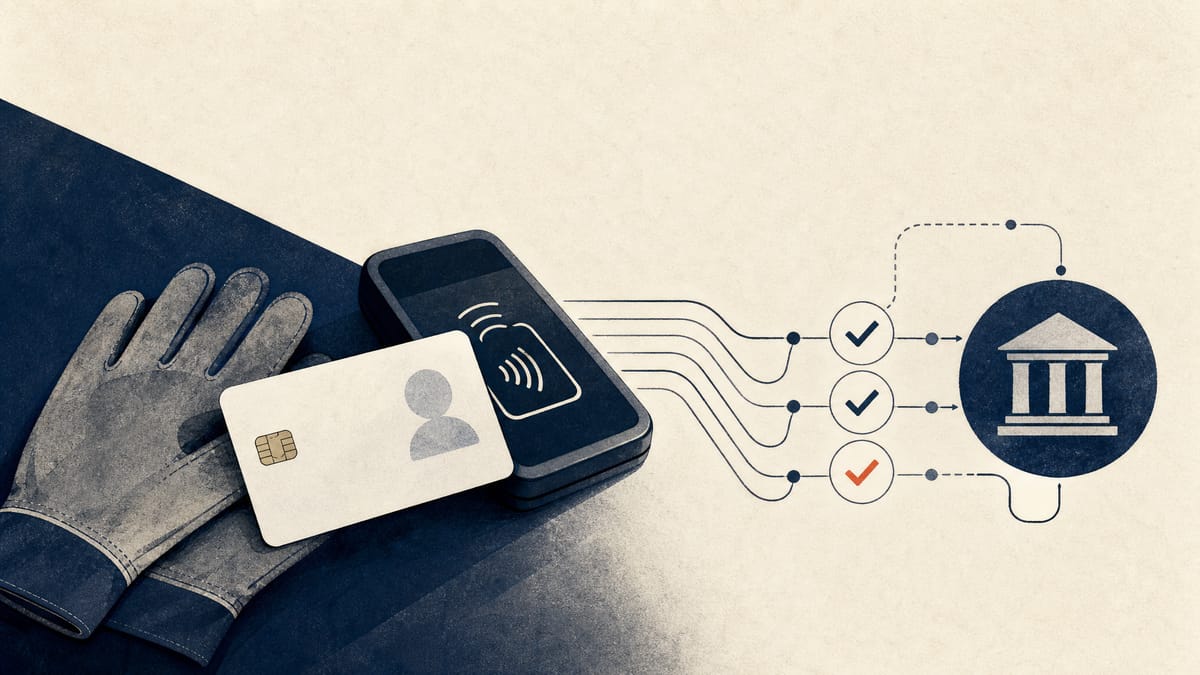
MLIT has opened a month-long consultation on a draft specific personal information protection assessment covering the administrative work behind automobile mechanic skill tests. The operational point inside the draft is concrete: qualification information can be registered either online through Myna Portal or on paper, and the online route would use the electronic certificate on a My Number card to confirm that the applicant is the qualification holder.
How the identity check works
The draft says the personal number would be captured using the My Number card's input-assistance function, with the aim of preventing alteration and preserving authenticity. Registered information would then be checked through information linkage using the Basic Resident Register Network System, within the scope allowed by the Resident Register Act and the My Number Act, to confirm identity information. The public comment itself is being run under Article 28, paragraph 1 of the My Number Act.
Why this matters
This is a narrow policy file, but it shows how one national qualification process is described in the draft: online application, card-based identity verification and resident-register checks are used together. The excerpted assessment places the process in the portion tied to a national qualifications information-linkage and utilization system. Just as importantly, the quoted workflow keeps a paper application route, so this is not a digital-only gate for applicants.
What happens next
Comments are open until July 25 and can be submitted in Japanese via e-Gov, email or post. The ministry says commenters should include their name, address and contact details, and warns that names may be published alongside the substance of comments unless anonymity is requested. Phone submissions are not accepted, and MLIT says it will use the comments as reference for its final decision without replying individually. For now, the immediate policy event is the consultation itself.