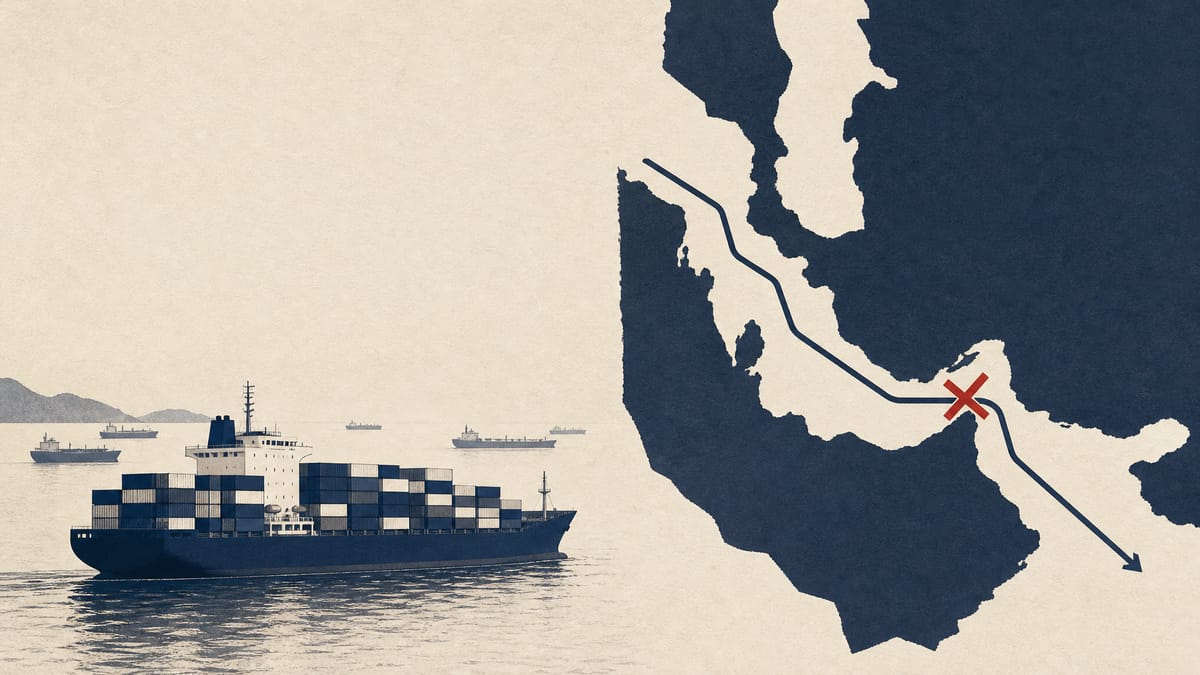
Mitsui O.S.K. Lines reported net profit of ¥179.3bn for the six months to September 30, up from ¥116.2bn a year earlier, on sales of ¥1.275tn. Operating profit was ¥72.7bn against ¥71.8bn, so most of the gain came below that line: equity-method income of ¥97.3bn, of which Ocean Network Express (ONE) contributed ¥64.1bn.
Read the comparison with care
The half-year figures are not like for like. From this period, 384 subsidiaries that used to close their books on December 31 are consolidated for nine months, from January 1 to September 30, and the company therefore prints no year-on-year growth rates in its headline table. Adjusted to a six-month basis, it shows sales of ¥1.07tn (up 23.3%), operating profit of ¥64.5bn (down 10.2%) and ordinary profit of ¥159.8bn (up 39.5%).
Containers and bulk carried the half
The container segment's ordinary profit rose to ¥73.4bn from ¥23.9bn. The company attributes this to strong cargo demand and port congestion at major Asian ports, which limited effective capacity and kept spot rates high, mainly on Asia to North America routes. ONE posted a sharp profit rise even though it halted services to the Persian Gulf and faced higher fuel costs.
Dry bulk ordinary profit reached ¥19.7bn from ¥0.1bn. Mitsui O.S.K. Lines said slow steaming, spread by fuel-supply worries linked to the Middle East, tightened capsize vessel supply, and typhoon-related congestion at Chinese ports added to it. In tankers, crude rates ran well above the prior year as long-haul US and South American cargoes replaced Middle Eastern oil.
| Segment | Prior year | Current period |
|---|---|---|
| Dry bulk | ¥0.1bn | ¥19.7bn |
| Energy | ¥30.8bn | ¥33.6bn |
| Chemical logistics | ¥14.4bn | ¥12.0bn |
| Product transport | ¥66.0bn | ¥86.5bn |
| Of which containers | ¥23.9bn | ¥73.4bn |
Fuel, the yen and Hormuz
The yen averaged ¥160.12 per dollar, ¥14.03 weaker than a year earlier, and bunker fuel averaged US$865 a tonne against US$546. Car-carrier profit fell: the company cites the closure of the Strait of Hormuz, which stopped Persian Gulf sailings, along with higher fuel costs and port congestion. Chemical logistics ordinary profit fell 16.4%, and the company says US Gulf chemical tanker rates have been softening since July.
An outlook built on closed waterways
The full-year forecast is unchanged from the November 2 revision: sales of ¥2.37tn, operating profit of ¥151bn, ordinary profit of ¥295bn and net profit of ¥300bn. Earlier Tokyo Brief coverage The first-quarter forecast had put net profit at ¥240bn. The company states that its segment forecasts assume the Persian Gulf and Red Sea remain unnavigable for the full year, and it uses ¥157.58 per dollar and US$716 a tonne for high-sulphur fuel. That is a forecast premise the company chose, not a verified state of the waterways.
Payouts
The board declared an interim dividend of ¥100, up from ¥85. It also approved a buyback of up to 9mn shares (2.62% of shares outstanding excluding treasury stock) and ¥50bn, to run from November 10 to March 31, 2027. Purchases may not be made in part or in full depending on market conditions, and the shares are in principle to be cancelled. A three-for-one split takes effect on January 1, 2027, lifting the buyback ceiling to 27mn shares. Management targets a total payout ratio of about 40%.
Interest-bearing debt stood at ¥2.545tn, up ¥49.8bn from the end of March, and the equity ratio was 48.9%.