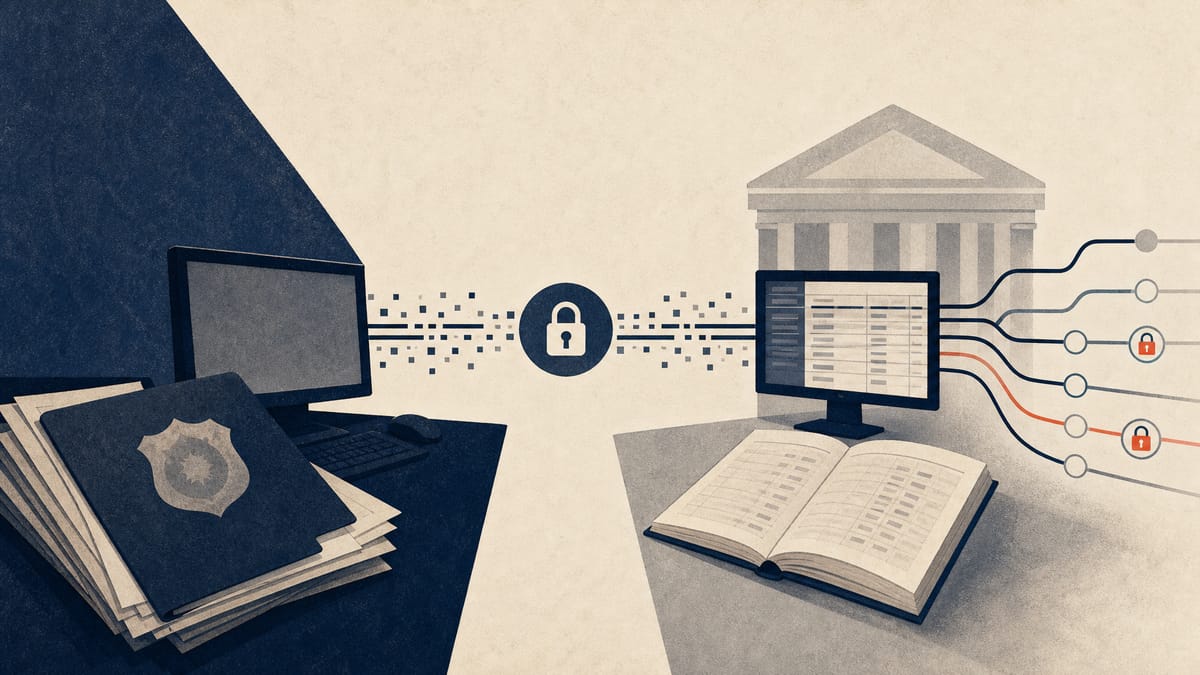
Japan is changing a very unglamorous part of fraud response, the handoff between police and banks. From June 1, prefectural police handling special-fraud cases can send inquiries to participating financial institutions online via the National Police Agency under a new public-private framework aimed at tracing, freezing and recovering victim funds more quickly. That sounds administrative. It is. But when money is moving across accounts, administration is often the race itself.
Why the old process struggled
The official explanation starts with the basic problem of bank-transfer fraud. In the cases covered by the notice, victims send money into a designated deposit account, but the funds often do not stay in that first destination account for long. The source says criminal groups quickly move the money into other accounts, which means police are not chasing one balance but a chain of transfers.
Until now, police have been asking banks not only to freeze the original recipient account but also to tell them where the money went next. The notice says those inquiries have sometimes been made by mailing written documents to the bank. That delay matters because, by the time a response is received, the victim funds have often already been transferred again into another account, making recovery difficult.
The original recipient account can therefore be frozen while the larger trail is already disappearing. Each extra round of correspondence reduces the chance that the money is still sitting where police last saw it. In other words, the old workflow could identify the first account and still lose the case's most important asset, time.
What changes on June 1
The new framework is designed to compress that lag. The National Police Agency says it has concluded agreements with financial institutions, and prefectural police will conduct their inquiries to those participating institutions online through the agency. The participating institutions are expected to respond quickly, replacing at least part of a paper-heavy process with a faster digital route.
The notice says the aim is broader than information gathering for its own sake. Earlier inquiries to the bank managing the onward-transfer account should allow earlier freeze requests there too, which the agencies say will support tracking, freezing and recovering victim funds and help prevent losses from spreading. The same faster trail is also supposed to let police start investigations into cash mules and related actors sooner, with the goal of earlier arrests of suspects.
Why business readers should care
For participating banks, this is an operational change disguised as a policy announcement. A request that might previously have involved mailed paperwork and a slower reply cycle can now arrive through a defined online channel routed by the National Police Agency. That could mean tighter response expectations for compliance, fraud-monitoring and back-office teams, even though the notice does not publish a service-level target. In fraud response, speed is not a nice-to-have, it is the product.
Who is named
The institutions listed as participants are Mizuho Bank, MUFG Bank, Sumitomo Mitsui Bank, Resona Bank, Seven Bank, Rakuten Bank, AEON Bank, SBI Shinsei Bank and Japan Post Bank. Because the framework relies on agreements with participating institutions, that published list effectively defines the system's initial reach, at least in the material released with the notice.
What is still unclear
The public excerpt leaves some practical questions unanswered. It does not spell out response-time targets, the technical standards for the online inquiry channel or whether additional institutions will join after launch. Banks beyond the named participants are also not covered in the excerpt. So the direction of travel is clear, faster police-to-bank inquiries from June 1, but the operating manual remains thin. The success of the framework will depend on whether the new workflow can outrun the next transfer in the chain.