Japan is moving to write honeybees into the rulebook for feed additives containing tylosin tartrate, with the agriculture ministry proposing explicit standards on the target animal, dosage and waiting period under its veterinary-drug-use ordinance. Public comments are open until July 26.
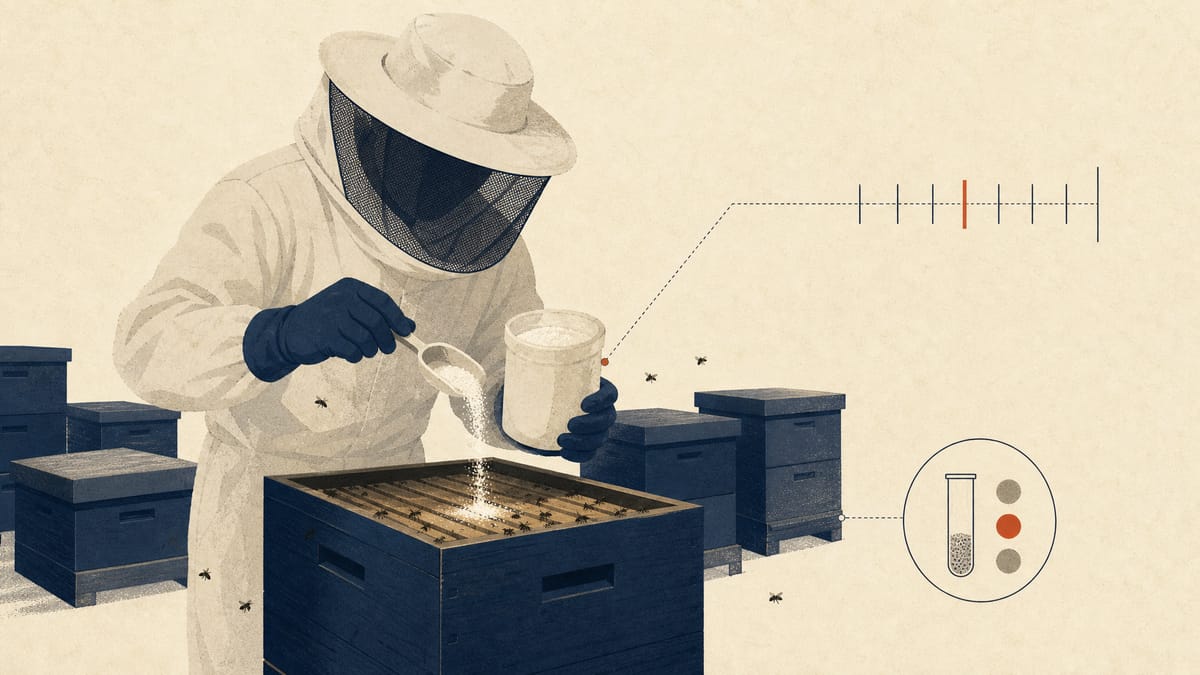
Under the draft, feed additives containing tylosin tartrate would be added to Table 1 of the ordinance, and honeybees would be added as the target animal. The visible dosing text in the linked overview sets one seven-day ceiling at 50mg potency per 10,000 adult bees and 200mg potency per brood box. It also shows one administration route, mixing the product into powdered sugar at 10mg potency per gram and sprinkling it from the top of the brood box for oral administration.
| Feature | Draft detail |
|---|---|
| Regulated product | Feed additives containing tylosin tartrate |
| Target animal | Honeybees |
| Standards being set | Target animal, dosage and waiting period |
| Visible seven-day dose cap | Up to 50mg potency per 10,000 adult bees, and up to 200mg potency per brood box |
| Visible administration route | Mix to 10mg potency per 1g of powdered sugar, then sprinkle from the top of the brood box for oral administration |
| Comment window | June 26 to July 26, 2026 |
| Status | Draft amendment in public consultation after a positive Pharmaceutical Affairs Council review; no special opinion returned in the statutory consultation with the prime minister |
The legal mechanism itself is established. The statute behind the ordinance lets MAFF set mandatory use standards when improper use of a veterinary drug could result in food products that risk human health. This amendment applies that mechanism to honeybee use of tylosin tartrate products, rather than leaving the issue only at the level of product approval.
MAFF says the proposal follows residue trials on honeybee use carried out under a commissioned project. It also says the Pharmaceutical Affairs Council found the proposal appropriate, and that the statutory consultation with the prime minister produced no special opinion. The draft is still open to comment, and the ministry says it will consider submitted views before deciding the amendment.
Outside Japan, the audience is specialised but easy to identify: suppliers, buyers and operators that must meet Japanese compliance rules in beekeeping or honey production. A final rule would give them explicit legal language on honeybee use of tylosin tartrate, including dose limits and a waiting-period framework, instead of leaving the point to the broader veterinary-drug regime. One caution, the Section 3 text visible in this packet cuts off mid-sentence. Tokyo Brief can therefore report the dose cap and administration method above, but not any full alternative administration route or complete waiting-period language beyond that excerpt.