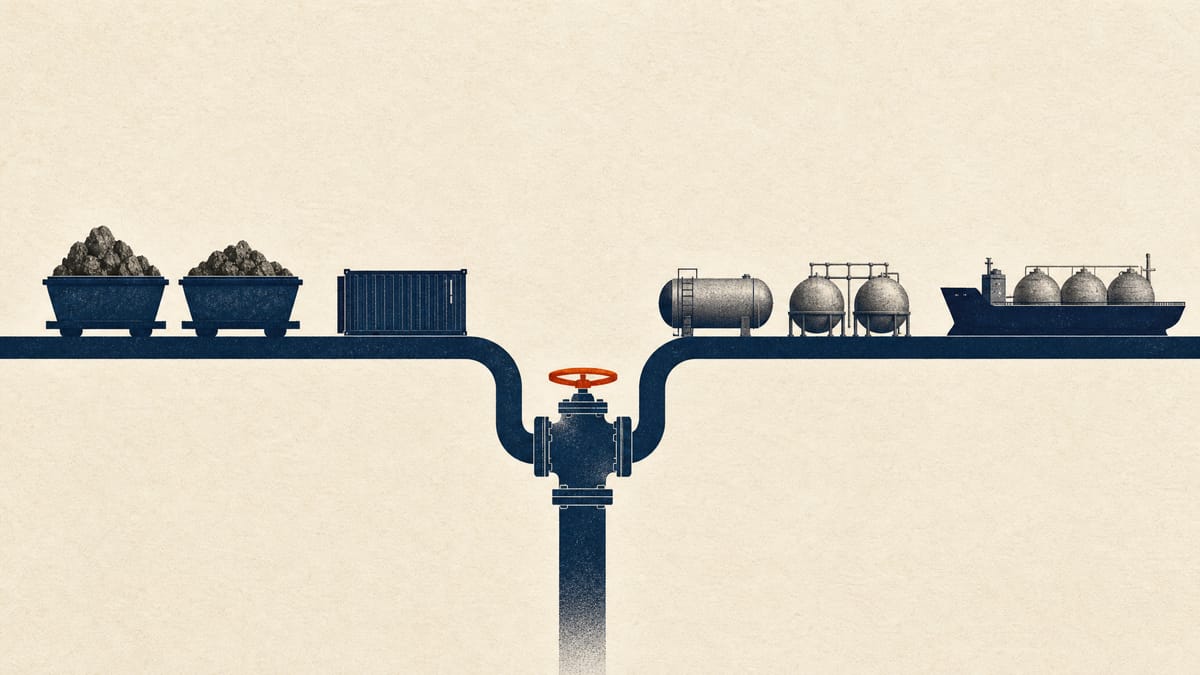
Japan and Australia signed a memorandum of cooperation on October 2, 2026 to coordinate their state-backed financiers. It is a channel for talks, not an investment award: the text sets out no financing amount and approves no project.
Who signed
For Japan, the signatories are the Ministry of Finance, the Ministry of Foreign Affairs and the Ministry of Economy, Trade and Industry. For Australia, they are the Department of Finance and the Department of Foreign Affairs and Trade. The Ministry of Finance said the memorandum was signed at the inaugural Japan-Australia Strategic Investment Networking Forum, held in celebration of the 50th anniversary of the two countries' Basic Treaty of Friendship and Cooperation. The forum brought together representatives from around 20 Japanese and Australian policy and financing agencies. The ministry published its note on October 5.
Agencies and sectors
A footnote lists the financing agencies the framework covers: the Japan Bank for International Cooperation (JBIC), the Japan International Cooperation Agency (JICA), the Japan Organization for Metals and Energy Security (JOGMEC), Nippon Export and Investment Insurance (NEXI), Export Finance Australia (EFA), the Australian Renewable Energy Agency (ARENA), the Australian Infrastructure Financing Facility for the Pacific (AIFFP) and the National Reconstruction Fund Corporation (NRFC). Other institutions the two governments designate may be added.
The text names supply-chain resilience, including critical minerals and energy, and regional development objectives as the context. It frames the cooperation as covering the Indo-Pacific, including Japan and Australia themselves.
What the memorandum sets up
The participants say they will encourage financing and policy agencies to hold early discussions on potential co-investment projects, to help judge relative priority and what support is needed and available across both systems. They also agree to identify coordination points for regular meetings on priority projects and shared strategic risk assessments, and to improve information sharing so that efforts are not duplicated.
On tools, the memorandum points to two existing mechanisms. One is Japan's Overseas Economic Security Arrangement (OESA) Account, under which JBIC finances strategically significant projects. The other is Australia's National Interest Account, administered by Export Finance Australia. The participants say they aim to collaborate on best practices, including through use of both accounts.
The participants also acknowledge that some investments may fall outside normal risk or private investment parameters but can help draw in private capital.
Limits
The memorandum states that it creates no legally binding rights or obligations. Disputes over its interpretation go to consultation between the participants, not to any tribunal. It can be modified by mutual written consent and continues until either side gives at least six months' written notice. Neither the ministry's note nor the memorandum names a project or a committed funding amount.