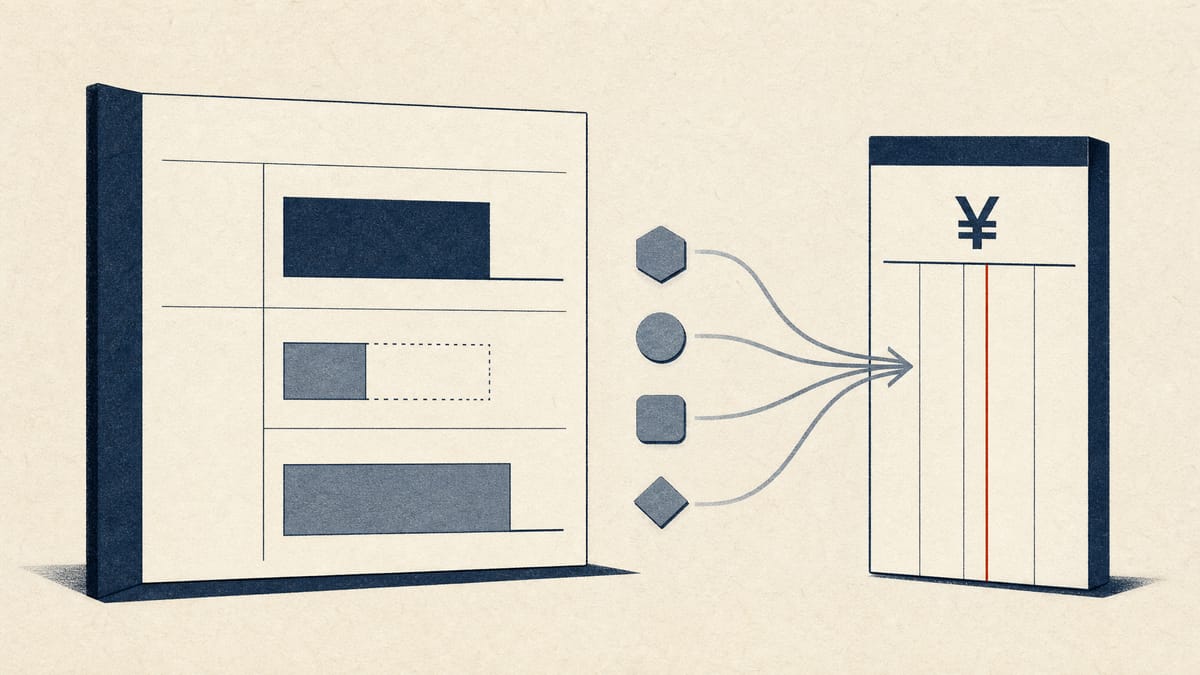
Japan's Financial Services Agency opened a public comment period on September 15, 2026, on draft cabinet office orders that amend the statutory formats for financial statements and consolidated financial statements. The drafts carry into force a batch of accounting standards the Accounting Standards Board of Japan finalized this summer, touching corporate taxes, financial instruments, consolidated statements, tax-effect accounting and consolidated cash-flow statements.
The most globally relevant change sits in the definition of "funds," the figure that anchors every Japanese cash-flow statement. The draft rules widen coverage of electronic settlement means regulated under the Payment Services Act from three statutory categories to four, and explicitly count foreign electronic settlement means when a registered electronic-settlement-means transaction operator handles them, under the 2023 cabinet office order governing those operators. In practice, a wider slice of stablecoin-type payment tokens would be treated the same as bank deposits and cash equivalents when Japanese companies report their cash position.
The consolidated balance-sheet form is also being redrawn for right-of-use lease assets. One version of the form shows a single combined figure for this line; the other requires companies to split it into gross cost, accumulated depreciation and net carrying amount.
The package additionally carries the revised ASBJ corporate-tax accounting standard into the statutory forms, changing how income-statement and balance-sheet captions describe corporate tax, local corporate tax, resident tax, enterprise tax, Japan's special defense-related corporate tax and, where material, the country's international minimum-tax charge. That minimum-tax amount continues to require separate footnote disclosure once it is material to the reported total.
Comments on the underlying ASBJ standards were invited from August 17 to October 19, 2026. Comments on the FSA's own draft cabinet office orders are due by 17:00 JST on Friday, October 16, 2026, delivered by post or through the e-Gov portal, with telephone submissions not accepted. Most of the changes take effect from the date of promulgation, but the cash-flow-statement provisions wait on a separate, still-pending ASBJ exposure draft on consolidated cash-flow statement preparation standards, and the FSA says it will time that piece to whatever application date the accounting board eventually sets.