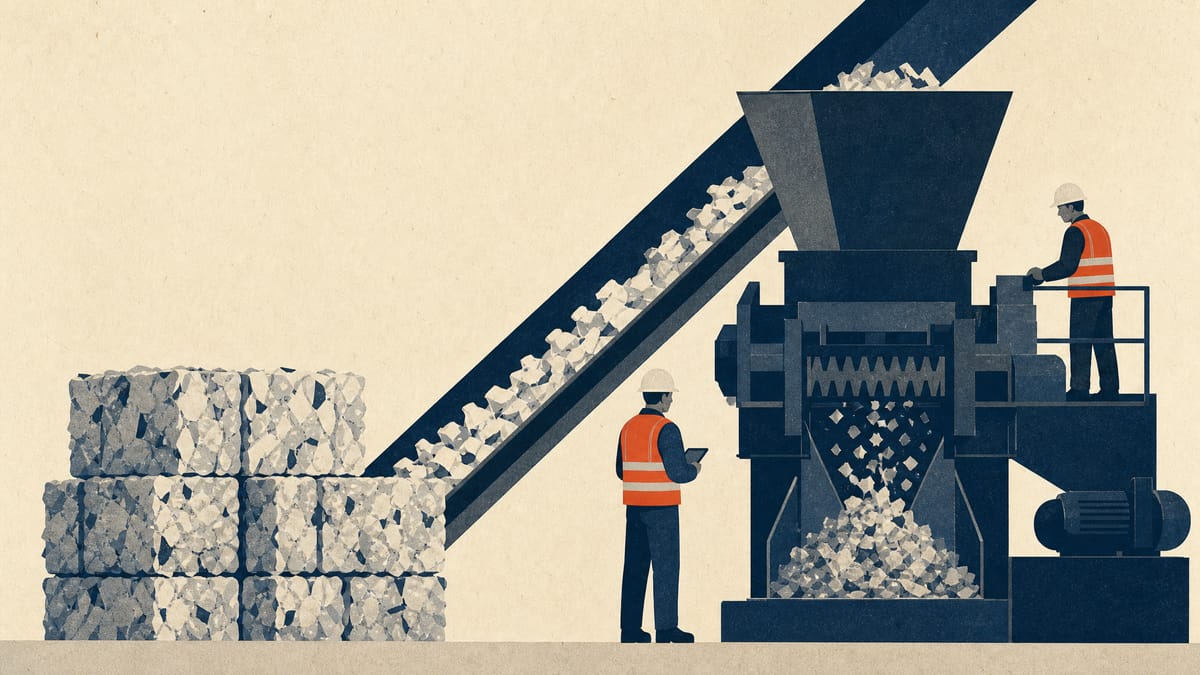
Daiseki Co., Ltd. said a consolidated subsidiary, a Daiseki environmental unit, has been selected in the fifth round of the Ministry of Economy, Trade and Industry's large-scale growth investment subsidy for labor-saving investment tied to wage increases at mid-sized, small and startup companies. The subsidized project is a plastic-resource re-commodification plant in Shizuoka City, carrying a total investment of ¥9.95bn, of which METI has approved a subsidy of ¥2.92bn.
| Metric | Value |
|---|---|
| Total project investment | ¥9.95bn |
| METI subsidy awarded | ¥2.92bn |
| Target wage increase (per employee, project staff) | 10.4% |
| Expected special-profit booking | Year to February 2030 |
The grant comes with a labor condition rather than a blank check: Daiseki must lift total salary paid per employee working on the subsidized project by 10.4%, a target the company has committed to, not yet achieved. That structure is the point of the METI program, which channels capital-investment subsidies through a wage-increase requirement rather than funding equipment purchases alone.
Daiseki said the award has no effect on the earnings forecast for the year to February 2027 that it published on April 7, 2026. The subsidy income itself will not appear as a special profit until the year to February 2030, once the project is complete, and the company plans to apply compressed-entry accounting using the direct-deduction method to that gain. Daiseki also flagged that the final subsidy figure is not locked in: the amount can still change depending on the results of a post-completion review. For a company whose core business is industrial waste treatment and recycling, the Shizuoka plant adds circular-economy capacity years before it adds anything to reported profit.