Web View
Banks finally get the rate trade
Japan's banks finally show the nice part of higher rates in black and white, while brands, platforms and cruise sellers spend the morning explaining the catch.
lead
Banks and the rate turn
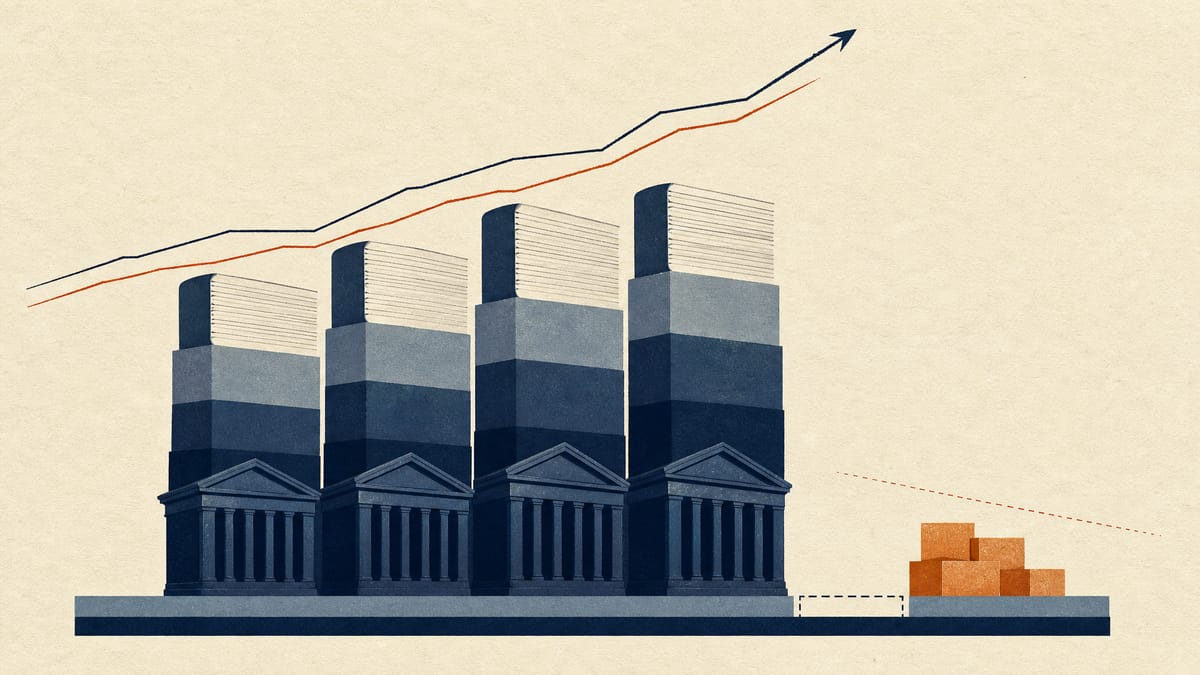
Higher loan yields lifted Japan’s major banks, while bad-loan ratios kept easing
Japan's major banks finally look like they are earning from higher domestic rates, not just enduring them. FSA aggregate data show attributable net profit rose 32.7% in the year to March 2026, driven by bigger domestic loan balances, higher loan yields and stronger fee income, while domestic loans reached JPY 408.1tn and the bad-loan ratio eased to 0.64% from 0.67%. The picture is not spotless. Credit-related costs worsened, bond-related gains and losses stayed negative, and the FSA says capital ratios fell at the four internationally active groups while domestic-standard groups were flat. For markets, that is the useful split: the pleasant part of Japan's rate turn is now visible in bank earnings, while the uglier part still has not shown up clearly in headline asset quality.
quick hits
More to Know
Asics moves Onitsuka Tiger into OT GROUP for 2027 reorganization
Read moreAsics will move the Onitsuka Tiger business into wholly owned OT GROUP through an absorption-type company split effective Jan. 1, 2027, then place regional brand units underneath that structure. Management says the aim is faster decision-making and clearer accountability around a brand it describes as reaching about 160 countries and roughly 190 directly operated stores, not a spin-off or listing plan.
Regional banks got a rate boost, but the bond book still hurt
Read moreRegional lenders got more help from rates than from markets. FSA data show aggregate net profit rose 38% in the year to March 2026, with net interest income up to 49,747 in the agency's JPY 100mn units and loans outstanding reaching JPY 349.1tn, but bond-related gains and losses worsened to -11,557 and the domestic-standard capital ratio edged down to 10.16%. The bad-loan ratio did improve to 1.54% from 1.64%, which is encouraging but still only an aggregate comfort blanket.
FSA tells banks to sharpen mortgage explanations and supply-chain checks
Read moreThe FSA's April agenda for banks was unusually specific: watch Middle East-related supply-chain stress beyond direct counterparties, keep financing flowing to affected firms, give mortgage borrowers clearer explanations of rate risk and repayment simulations, and finish digitising bill and check functions by end-March 2027. It is not a new rule package, but it is a tidy snapshot of what supervisors want fixed now that higher rates and external shocks are back in the room.
ANYCOLOR points to slower profits after a year of 30% sales growth
Read moreANYCOLOR's year to April was still robust on a non-consolidated basis, with revenue up 29.9% to JPY 55,681m and operating profit up 23.9% to JPY 20,172m, plus a dividend rise to JPY 75 a share. The mood shift is in next year's guide: revenue is seen at JPY 56,000m to JPY 60,000m and operating profit at JPY 18,000m to JPY 20,000m, with a JPY 62 dividend forecast, a clear message that growth is still there but the margins may have peaked for now.
GENDA’s sales jump 45%, but acquisition costs push it into a quarterly loss
Read moreGENDA is still buying growth faster than it is booking clean profit. First-quarter sales jumped 45.0% to JPY 49,702m, but GAAP operating income fell 79.2% to JPY 288m and the group swung to a JPY 752m net loss as depreciation, goodwill amortisation and financing costs rose; management kept full-year targets unchanged and kept steering investors toward adjusted EBITDA of JPY 4,612m. The filing still offered no quarterly cash-flow statement, which is mildly inconvenient when the pitch is "trust the adjusted numbers".
Atrae lifts profit outlook on richer Wevox mix, raises dividend
Read moreAtrae raised profit guidance without touching the sales line: revenue for the year to September stays at JPY 8.6bn, while operating profit rises to JPY 1.3bn from JPY 1.1bn and net profit to JPY 908m from JPY 756m. Management credits stronger higher-margin SMBC Wevox orders and lower-than-planned costs, and it lifted the annual dividend forecast to JPY 34 from JPY 33.
Auto and semiconductor-equipment demand lifts Artner’s first-quarter margin
Read moreArtner's first quarter points to stubbornly tight demand for engineers serving auto-related and semiconductor-equipment customers. The group posted JPY 3,503m in sales with an 18.1% operating margin, while the parent-company supplement showed utilisation at 98.3%, an average billing rate of JPY 4,808 an hour and engineer headcount up 5.8% to 1,350. The accounting caveat remains: the year-on-year operating detail is from parent-company disclosures, not a fully comparable group series.
Pharma Foods keeps year-end profit target after nine-month loss deepens
Read morePharma Foods kept its year-end profit target unchanged even after a much uglier nine months. Cumulative sales rose 3.7% to JPY 48,555m, but operating loss widened to JPY 1,430m, the equity ratio fell to 28.9% from 35.4%, and interest-bearing debt rose to JPY 17,235m; management says the loss was built into an investment-heavy plan and still forecasts JPY 2,000m in full-year operating profit. That leaves the fourth quarter doing a great deal of narrative heavy lifting.
Tobila Systems lifts sales, but profit still slips
Read moreTobila Systems is still finding demand, just not leverage. First-half non-consolidated revenue rose 22.0% to JPY 1.674bn, helped by security and solution sales, but operating profit fell 7.7% to JPY 485m and net profit slipped 5.1% to JPY 335m; management kept the full-year outlook and its JPY 20 year-end dividend plan unchanged. More anti-fraud spending is useful. Turning it into more earnings would be nicer.
CellSource cuts its way to interim profit, but keeps full-year operating loss forecast
Read moreCellSource turned a softer top line into a better interim profit picture. Consolidated revenue for the six months to April slipped 2.5% to JPY 1,775m, but SG&A fell 8.5% and operating profit climbed to JPY 125m from JPY 17m, even as combined blood- and adipose-derived processing cases edged down to 10,114 from 10,303. Management still kept its full-year forecast for a JPY 170m operating loss, saying the year remains one of strategic investment rather than tidy recovery.
quick hits
Quick Hits
Rock Field’s profits slump, but cash flow backs a higher dividend
Read moreSales slipped 0.2% to JPY 51,096m in the year to April, but operating profit fell 37.2% to JPY 780m and net profit 69.9% to JPY 98m. The company plans a JPY 24 annual dividend this year, up from JPY 23, and also plans JPY 24 for the coming year.
pluszero keeps full-year plan after a profitable first half
Read moreFirst-half non-consolidated sales rose 6.8% to JPY 851.5m and operating profit 7.5% to JPY 312.2m, and management left the full-year plan unchanged at JPY 2.01bn of sales and JPY 743m of operating profit. Presentation slides showed profit running ahead of internal half-year targets, while a same-day stock-option cancellation was described as having only a minor earnings impact.
Best One.Dot lifts dividend forecast to ¥26 as cruise outlook improves
Read moreThe cruise seller raised its year-end dividend forecast to JPY 26 a share from JPY 20 after lifting full-year earnings ranges, with sales now seen at JPY 2,850m to JPY 3,050m and net income at JPY 230m to JPY 260m. Management said a nearly sold-out May charter cruise and firm operator-hosted trip sales drove the better view.
Eole corrects crypto-asset accounts, leaves a ¥528 million loss and a rebound target
Read moreA correction to crypto-asset accounting and presentation left the year to March with JPY 14,159m of sales, JPY 211m of operating profit and a JPY 528m net loss. The company says the issue was classification, not new transactions, and now guides for JPY 1,270m of net income in the coming year.
Land aid near nuclear facilities comes with a three-year clock
Read moreJapan's current program can cover part of land-acquisition costs in qualifying development districts, with operations expected within three years of purchase and at least five jobs created within a year of opening. The portal listing shows a rate of JPY 2,500 per square metre and a JPY 55m ceiling, but the public excerpt does not show the full municipality list.
Howtelevision posts a record quarter, but leaves the year’s target alone
Read moreFirst-quarter revenue jumped 43% to JPY 825m and operating profit to JPY 164m from JPY 34m, led by new-graduate services, yet the company kept its full-year forecast at JPY 3.1bn of revenue and JPY 50m of operating profit. Office-move depreciation and continued investment in mond help explain why the guide still looks so cautious.
Karadanote returns to profit on lower sales, restarts shareholder benefits and approves FPO loan
Read moreNine-month non-consolidated revenue fell 32.0% to JPY 731.7m after lower-margin business was trimmed, but operating profit swung to JPY 146.4m from a JPY 65.8m loss. The company also restarted shareholder benefits using a fixed JPY 15m pool for eligible holders and approved a JPY 600m borrowing to fund the FPO share acquisition.
Kakiyasu keeps ¥85 dividend despite softer profit outlook
Read moreSales were almost flat at JPY 36,072m in the year to April, while operating profit fell 4.9% to JPY 1,426m, and management guided to another slight earnings dip in the coming year. The annual dividend stayed at JPY 85 and is forecast to stay there, even as the company cited higher raw-material costs, labour shortages and cautious consumers.