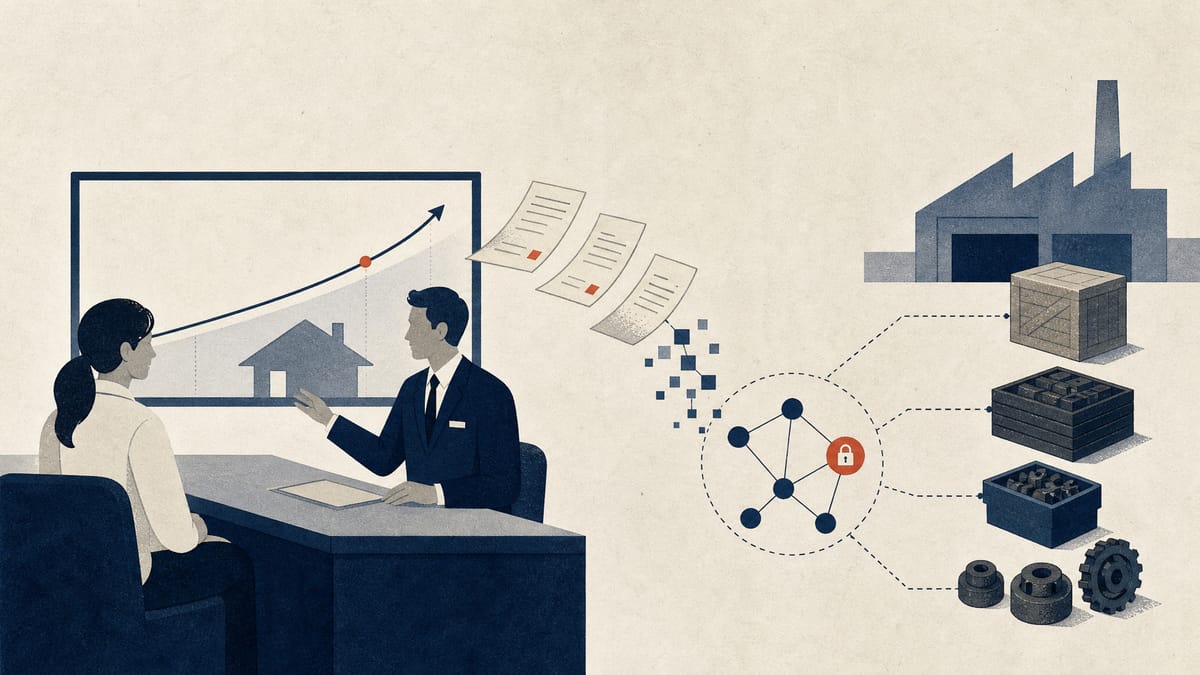
Japan's Financial Services Agency has given banks a distinctly practical to-do list for a more awkward operating environment. In discussion notes from meetings on April 14, 15 and 16 with major banks and the main regional-bank associations, the regulator told lenders to look beyond direct counterparties when Middle East tensions threaten supply chains, keep firms from running into funding trouble, explain mortgage rate risk more carefully, and finish the shift away from paper bills and checks before the end of March 2027.
| Issue | What banks are being asked to do | Timing or context |
|---|---|---|
| Middle East risk and funding | Monitor effects on clients' full supply chains, not only direct counterparties, and ensure business financing is not seriously disrupted | Raised in April meetings, with reference to a March 27 emergency meeting and request |
| Price pass-through | Reinforce March requests on price pass-through and fair transaction practices, including consideration for smaller subcontracting businesses facing higher input and energy costs | Requests dated March 18 and March 27 |
| Mortgage-rate explanations | Review explanation systems, tailor rate-risk explanations to borrower circumstances, consider repayment simulations, and improve support for existing borrowers | Industry request issued March 31 |
| Electronic bills and checks | Prepare for full digitisation of bill and check functions | Target deadline is end-March 2027 |
Corporate shocks, not just bank shocks
The corporate message is broader than simple exposure management. The FSA said banks should monitor effects not only on direct clients but across entire supply chains. It also pointed back to a March 27 emergency meeting with public and private financial institutions and relevant ministries, and asked lenders to ensure businesses do not suffer serious funding disruption.
That same April agenda revives a familiar headache for smaller companies, whether they can pass costs on. Banks were asked to reinforce March requests on price pass-through and fair transaction practices, including consideration for subcontracting businesses facing higher raw-material and energy costs.
The way the agenda is bundled is revealing. Supply-chain risk, SME pricing power, consumer mortgage explanations and payment-system digitisation sit in the same supervisory note. The signal is that the FSA wants day-to-day bank procedures, not just high-level risk talk, to adjust to a world of higher rates and more external shocks.
Mortgage conversations get more specific
For households, the FSA became unusually concrete. Citing higher interest rates, rising housing prices and the spread of non-face-to-face mortgage procedures, it asked banks to self-check and, where needed, revise their explanation set-up for home-loan customers. Lenders were also told to tailor rate-risk explanations to borrowers' circumstances and understanding, consider showing repayment-burden simulations based on interest-rate moves judged reasonable in current conditions, and improve information and consultation responses for existing borrowers as well as new ones.
One year left for paper payment plumbing
The last item is back-office plumbing, but the deadline is close enough that it stops being dull. The FSA reminded banks that full digitisation of bill and check functions is supposed to be completed by the end of March 2027, leaving less than a year when the meetings were held. The note is a summary of issues the agency raised, rather than a new rule package, but the priorities are clear: make room for customer financing when geopolitical shocks hit, explain how rate changes could alter mortgage repayments, and finally remove paper from a part of corporate payments that has been scheduled for digitisation for years.