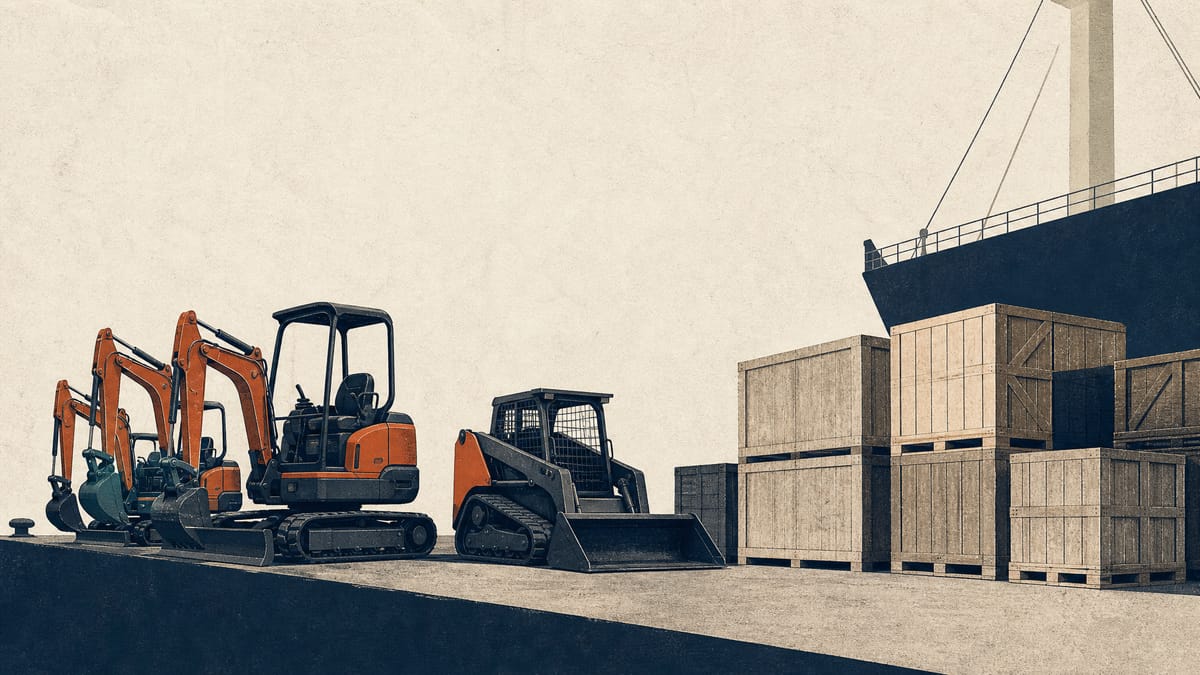
Takeuchi Mfg., the Nagano-based maker of mini excavators and crawler loaders, booked a 12.2% rise in quarterly sales to ¥56.8bn for the three months to May, yet operating profit fell 9.3% to ¥9.98bn. The gap between a stronger top line and a weaker bottom line has one cause: the cost of exporting to the United States.
The company said US tariffs added ¥3.54bn to its costs in the quarter. It managed to push ¥1.66bn of that onto customers through higher prices, leaving a net profit hit of ¥1.87bn. The US segment illustrates the squeeze most clearly: sales there rose 16.1% to ¥31.18bn, but segment profit dropped 31.9% to ¥1.52bn, hurt by the tariff bill and by a bigger share of sales going to large rental companies that qualify for volume discounts.
| Metric | Amount |
|---|---|
| Tariff cost increase | ¥3.54bn |
| Passed on to customers via price increases | ¥1.66bn |
| Net profit hit from tariffs | ¥1.87bn |
| US segment profit (year-on-year change) | ¥1.52bn, down 31.9% |
The demand side of the business looks nothing like the profit line. Orders received jumped 59.2% year-on-year to ¥90.31bn, driven largely by bulk orders from big US rental companies, stronger European bookings, distributor price increases and a weaker yen. The order backlog rose by ¥33.5bn to ¥77.06bn. Takeuchi has decided this is the last year it will break out those quarterly order and backlog figures at all: management says the swings have become too volatile from quarter to quarter to serve as useful guidance for investors, and disclosure will stop after the fiscal year ending in February 2027.
Despite the tariff drag, net income attributable to shareholders edged up 0.2% to ¥7.43bn, helped by a ¥362mn foreign-exchange gain that pushed ordinary profit up 0.9% to ¥10.51bn. Management left its full-year forecast untouched: sales of ¥244bn (up 8.3%) and operating profit of ¥37.3bn (down 1.0%) from the April guidance, with the annual dividend still projected at ¥220 per share against ¥210 last year.
The unresolved question sits in that pass-through ratio. Takeuchi covered barely half its added tariff cost with price increases this quarter. Whether that ratio improves, holds, or slips further depends on decisions Takeuchi has not yet had to make public, and on a US tariff policy the company does not control. For now, the order book says American demand is intact; the profit line says paying for access to it costs more than it used to.