Fujikura has done more than nudge its outlook. The company lifted guidance for the first half ending September 30 to sales of ¥778bn, operating profit of ¥174bn, ordinary profit of ¥177bn and net income of ¥128bn, up from ¥594bn, ¥92bn, ¥95bn and ¥67bn forecast on May 14. For the full year ending March 2027, it now expects sales of ¥1.462tn, operating profit of ¥310bn, ordinary profit of ¥316bn and net income of ¥229bn, versus prior guidance of ¥1.243tn, ¥211bn, ¥218bn and ¥156bn.
| Period | Sales | Operating profit | Ordinary profit | Net income attributable to owners |
|---|---|---|---|---|
| First half, previous → revised | ¥594bn → ¥778bn (31.0%) | ¥92bn → ¥174bn (89.1%) | ¥95bn → ¥177bn (86.3%) | ¥67bn → ¥128bn (91.0%) |
| Full year, previous → revised | ¥1.243tn → ¥1.462tn (17.6%) | ¥211bn → ¥310bn (46.9%) | ¥218bn → ¥316bn (45.0%) | ¥156bn → ¥229bn (46.8%) |
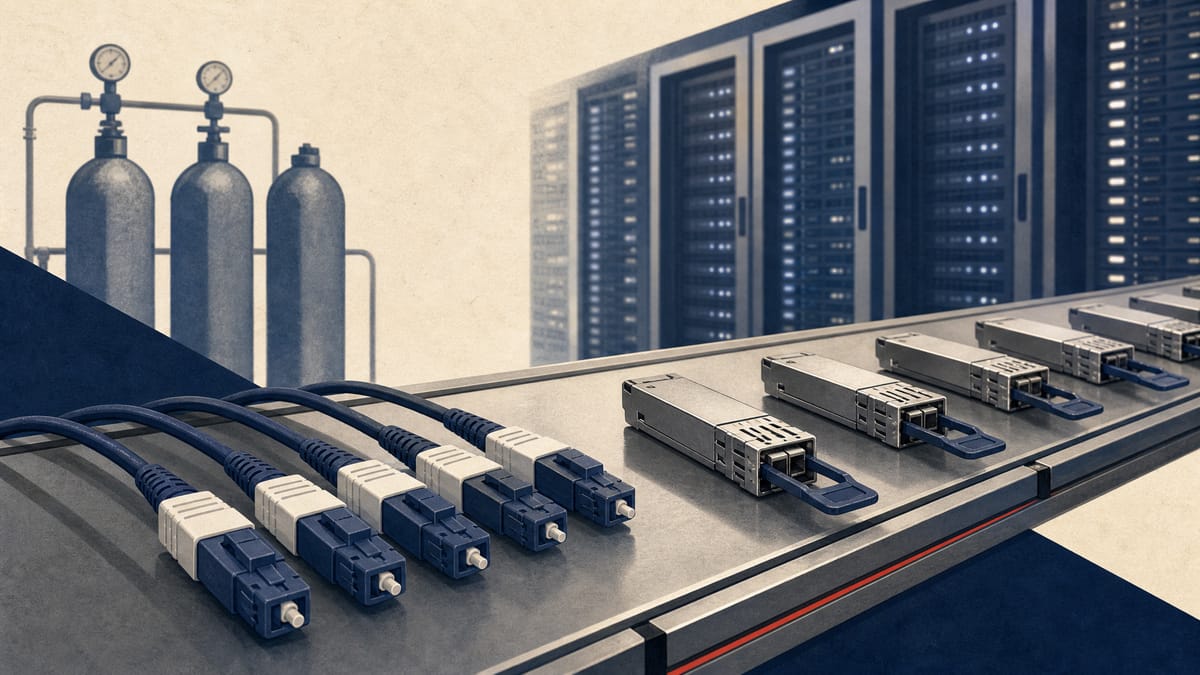
The explanation is why the update matters. Fujikura says the change came from its information and telecommunications business, where it won project orders for optical-component products from hyperscalers that were not built into the original plan. It also says it achieved selling-price increases, and that the impact of a feared hydrogen shortage has eased. Put differently, the company is pointing to a useful combination of better demand, better pricing and less supply pressure, all within the same business line.
For readers tracking hyperscaler network spending through supplier disclosures, that is the useful bit. Fujikura does not name customers, quantify the contribution of each driver, or spell out which optical-component products saw the extra orders. It does, however, identify the information and telecommunications business as the engine of the revision, rather than offering a vaguer groupwide explanation. That makes this less about generic optimism and more about a concrete pocket of demand showing up in guidance.
The scale is striking. The revised first-half operating-profit forecast of ¥174bn is 89.1% above the previous guide and well above the ¥90.171bn Fujikura recorded in the same period a year earlier. First-half sales guidance, now ¥778bn, is 31.0% above the prior forecast and above the previous year's first-half actual of ¥558.994bn. For the full year, the operating-profit forecast of ¥310bn is 46.9% above the earlier guide and above last year's ¥188.707bn actual, while sales guidance rises 17.6% to ¥1.462tn from ¥1.243tn. Net income guidance was also lifted by 91.0% for the first half and 46.8% for the full year, while ordinary profit rose 86.3% and 45.0%, respectively. When a company adds ¥219bn to its annual sales target in mid-June, the interesting question is not whether demand improved. It is where, and whether the lift can stick.
Fujikura's own answer is cautious but clear. The company says that in the second half it expects at least the selling-price increases achieved in the first half and the easing of hydrogen-shortage effects to continue. That supports the full-year raise, but it also marks the main uncertainty. The disclosure does not say whether unexpected hyperscaler project orders will repeat at the same pace, nor does it put a number on how much of the upgrade came from orders, pricing or relief from the hydrogen constraint. Fujikura also repeats the standard warning that actual results can differ from forecasts because the outlook is based on information available on the release date. The message, then, is strong without being magical: optical-component demand from hyperscalers is large enough to move guidance, pricing is helping, and one feared supply bottleneck is less severe than expected.