Saxa has finally put numbers on the year it wants investors to read as a reset, not a rebound. For the year ending March 2027, the electronics group now expects sales of ¥47.5bn, operating profit of ¥1.0bn and ordinary profit of ¥1.1bn, after leaving guidance undecided in May while it reviewed strategy. Net profit is forecast at ¥16.5bn, but that headline jump sits alongside a much weaker operating line and is tied to gains on a real-estate sale rather than a clean improvement in the core business.
That distinction is the story. In its new mid-term plan, Saxa labels the current year a "business structure transformation period" and pushes the return-to-growth case into the three years after that. Management says strategy had drifted away from the group's manufacturing strengths, hurting profitability, and it is now prioritising profitability, capital efficiency and sharper selection of what to expand, review or exit. By 2029, the company is targeting operating profit of ¥5bn and ROE of 8%. Its forecast ROE of 41.4% for the current year comes with a large caveat in the plan itself: it includes gains from fixed-asset sales.
The first year of that reset is deliberately awkward. In Saxa's operating-profit bridge, higher materials costs, rising labour costs, asset-disposal expenses and other headwinds add up to a ¥2.6bn drag, partly offset by ¥1.2bn of restructuring measures and ¥0.3bn of business growth. Management is pairing that with visible belt-tightening. The president will voluntarily return 30% of one month's fixed pay, executive pay tables are being cut at Saxa and group company Saxa Techno, and executive bonuses will not be paid for the year ended March 2026.
Shareholders, meanwhile, are being offered a firmer capital-return formula once the reset year passes. From the year ending March 2028 through the year ending March 2030, dividends are to be set at the higher of a 4% DOE or a 100% total payout ratio, with the payout calculation adjusted to exclude special gains and losses after tax effects. Employees are also being pulled into the next phase: Saxa is studying a J-ESOP share-delivery trust for staff, with introduction targeted for January to March 2027, and a groupwide retirement-benefit overhaul for April 2028 that would move future accruals from defined benefit to defined contribution plans. The company says detailed design, approvals and the earnings impact are still being worked through.
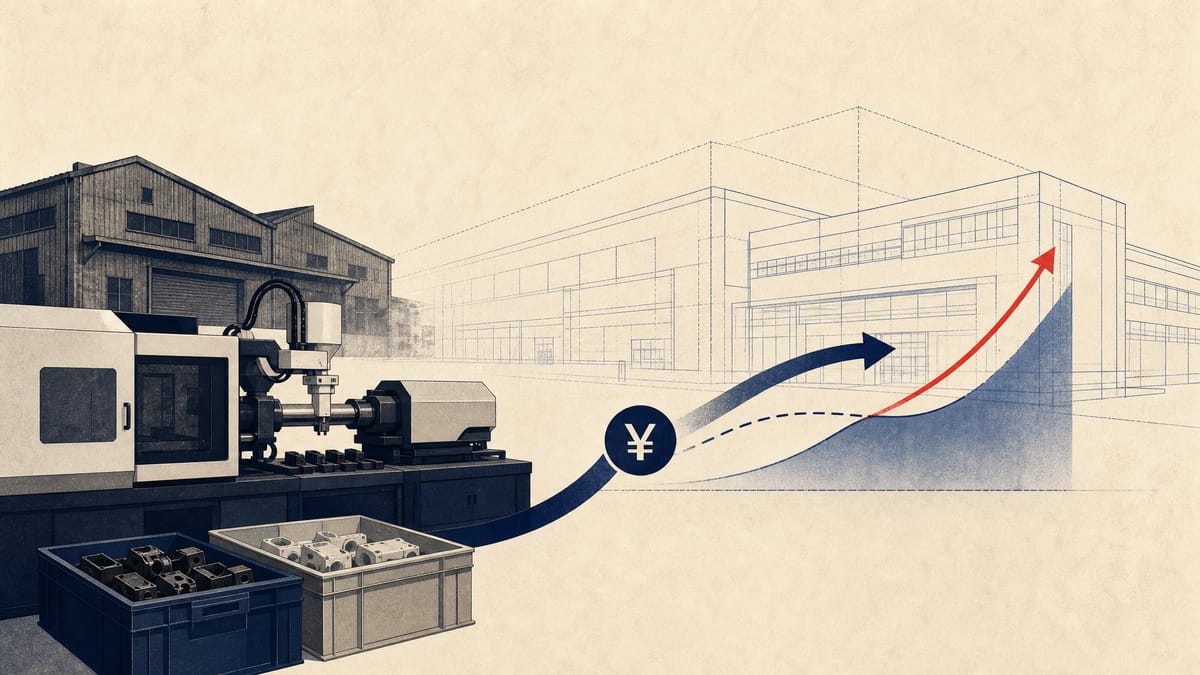
The clearest operating expression of the reset is in Yonezawa. Saxa plans to sell an aging factory through competitive bidding starting in July 2026 and aims to sign a sale contract in January 2027, using a sale-and-leaseback structure until a replacement plant is ready. It also plans to start construction of a new injection-moulding factory in August 2026, with investment of ¥2.8bn to ¥3.5bn and start-up in March 2028. The broader Yonezawa Advanced Factory concept has been scaled down because of higher materials and construction costs, but not abandoned. One final caveat for anyone tempted by the ¥16.5bn net-profit figure: the company says this newly announced factory sale is not yet included in the current forecast because price and earnings impact are still undecided.