M3's planned full acquisition of Wiseman is less about adding another software label than about buying a denser foothold in care and welfare IT. In the formal notice, M3 says Wiseman brings a strong customer base and deep expertise in care and welfare, areas where M3 wants to push digitalisation harder. M3 already reaches more than 350,000 medical professionals, over 90% of Japan's doctors, and sells clinic-focused digital services. Wiseman adds systems developed, sold and supported for care and welfare operators, medical facilities and local governments.
The transaction itself is straightforward. M3 will acquire 242 Wiseman shares, representing 100% ownership, with execution planned for July 1. The purchase price is undisclosed. In separate supplementary materials, M3 says the consideration will be funded entirely from cash on hand. Wiseman, founded in 1983 and based in Morioka, had 18 branches nationwide, 535 employees at end-June 2025, sales of ¥12,377 million in the year ended June 2025 and an operating loss of ¥222 million. M3's supplement shows a current-year outlook of ¥13,980 million in sales and ¥1,586 million in operating profit.
| Metric | Detail |
|---|---|
| Stake to be acquired | 242 shares, 100% ownership |
| Planned execution | July 1, 2026 (planned) |
| Purchase price | Undisclosed |
| Funding | Cash on hand |
| Latest sales | ¥12,377 million, year ended June 2025 |
| Latest operating result | Operating loss of ¥222 million, year ended June 2025 |
| Current-year outlook | Sales of ¥13,980 million, operating profit of ¥1,586 million |
What M3 thinks it is really buying is installed base. In the supplement, the company says Wiseman has especially strong share in facility-based care, including about 40% in nursing care health facilities and about 25% in special nursing homes, plus 10% to 15% in several home-care categories. M3 wants to use that foothold to cross-sell existing group services, improve Wiseman's web marketing and add AI functions to Wiseman products, citing an internal example where AI features on a group care-tech product cut monthly work time from 7,370 minutes before use to 670 minutes after AI was added.
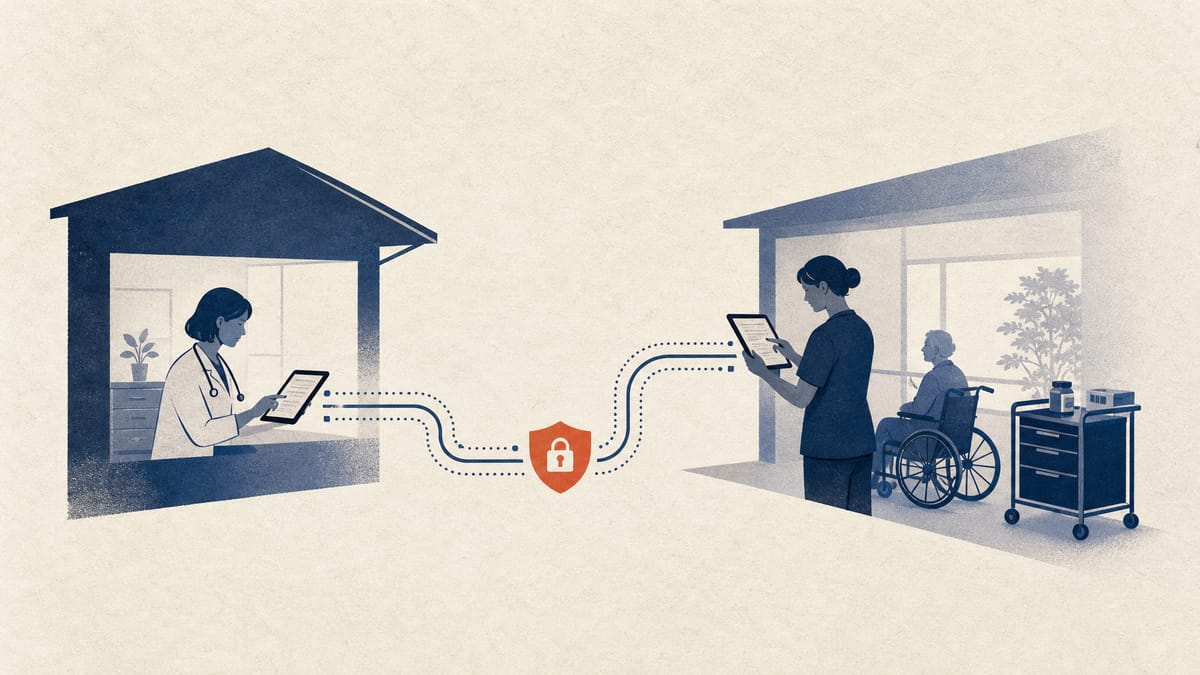
The other attraction is medical-care data flow. M3 says it wants to connect Wiseman's MeLL+ linkage system with its own cloud electronic medical-record service so information can move more smoothly between medical institutions and care facilities. That is the wider read-through for Japan's healthcare software sector: the valuable positions are increasingly the ones that sit between clinic, care-facility and back-office workflows, not just inside a single institution.
There are still blind spots. The formal filing says the impact on M3's consolidated results is still being assessed, even as the supplementary deck says the deal should lift earnings even after amortisation of intangible assets and have a positive per-share effect. The same deck also carries explicit forward-looking warnings and says information on outside companies is drawn from public sources that M3 has not independently verified. In other words, the strategic logic is clear, but the valuation and the payoff still require a little faith.