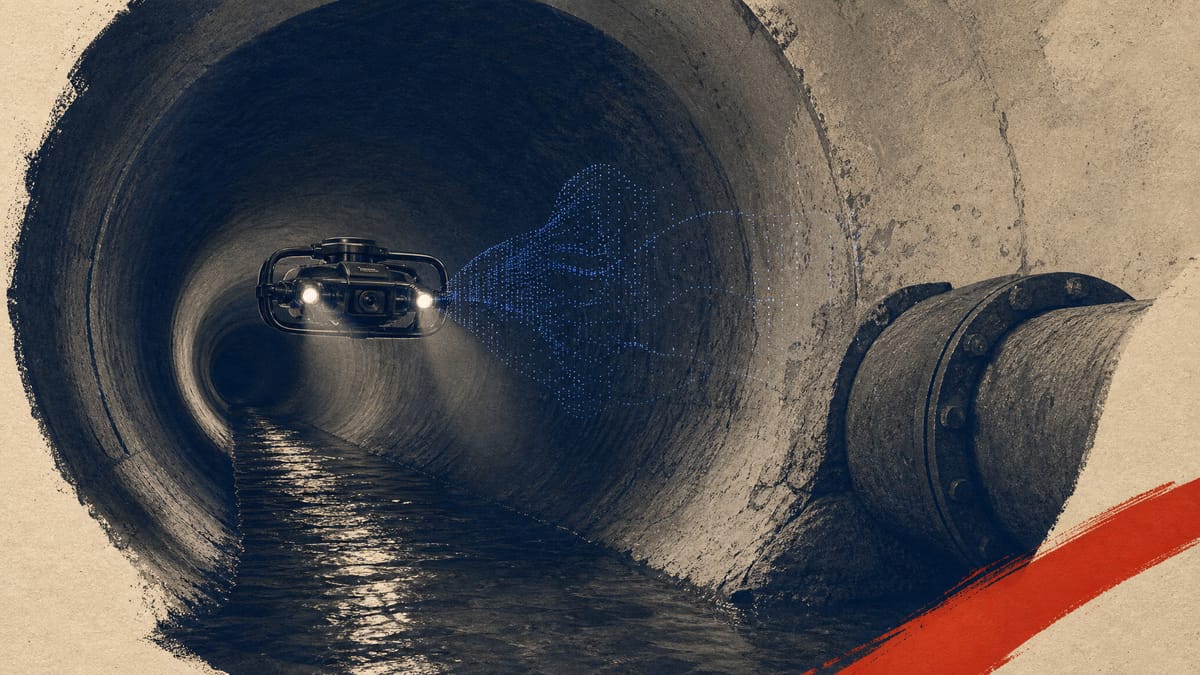
Liberaware has cut its full-year outlook after spending part of the year on free sewer surveys and drone demonstrations for municipalities, a strategic push meant to expand infrastructure-inspection demand but one that left less room for paid work in the near term. The company now expects sales of ¥1.7bn to ¥1.9bn for the year ending July 2026, down from its previous ¥2.22bn forecast, a reduction of 14.4% to 23.4%.
| Metric | Previous forecast | Revised forecast |
|---|---|---|
| Net sales | ¥2,220mn | ¥1,700mn to ¥1,900mn |
| Operating loss | ¥2,412mn | ¥2,154mn to ¥2,311mn |
| Ordinary loss | ¥177mn | ¥574mn to ¥730mn |
| Net loss attributable to owners | ¥178mn | ¥575mn to ¥731mn |
The trade-off
From the start of the year, Liberaware said it shifted resources into unpaid sewer-pipeline surveys and demonstrations to promote drone use in that field. That contributed to smaller and fewer ordinary inspection jobs in its inspection-solution service, slowing first-half progress. Management said orders have been recovering since the third quarter, after the company shifted back toward building its pipeline, but not enough to make up for the earlier shortfall. The same weakness then flowed into the digital-twin business, because less inspection work meant less related data-processing revenue.
The downgrade is not limited to one line item. Liberaware now expects drone-business revenue of ¥935mn to ¥1,097mn, versus an earlier ¥1,158mn forecast. Digital-twin revenue is now seen at ¥310mn to ¥331mn, down from ¥412mn. Solution-development revenue is projected at ¥390mn to ¥407mn, below the prior ¥450mn. New-area revenue has been cut most sharply, to ¥65mn from ¥200mn, after the launch of new products took longer than expected and overseas rollout was pushed back while the company reviewed market fit, customer needs and profitability more carefully.
What is still growing
This is not a case of demand vanishing altogether. In the first nine months, Liberaware posted sales of ¥1.216bn and an operating loss of ¥1.97bn. Product sales and rentals kept growing, and the company said cumulative equipment sales reached ¥319mn, up from ¥218mn a year earlier. But paid inspection work stayed soft, and gross margin slipped to 42.1% from 46.4%, which management attributed to low-margin projects rather than a structural reset in profitability. On the company's own basis excluding SBIR research spending and subsidy income, ordinary loss widened to ¥455mn from ¥62mn a year earlier.
Why the loss math looks odd
The oddest part of the revision is that Liberaware's operating-loss forecast improved even as the revenue outlook fell. The company now expects an operating loss of ¥2,154mn to ¥2,311mn, compared with its previous ¥2,412mn forecast. Liberaware said some SBIR spending tied to railway-inspection drone development will slip into next year after a review of development procedures and delays in deliveries of some major equipment, which reduces this year's selling, general and administrative burden. But that timing shift also pushes some related subsidy income into next year, so the ordinary-loss forecast worsens to ¥574mn to ¥730mn from the previous ¥177mn.
For readers, the disclosed message is straightforward enough: Liberaware is still trying to seed a future market in sewer and infrastructure inspection, and this year that market-making effort is coming out of current revenue. Product sales are growing, but the paid-services engine has not yet caught up.