Japan Ski Resort Development had enough demand to grow sales, but not enough to turn that into better operating profit. In the nine months to April 30, sales rose 8.9% to ¥9.98 billion, while operating profit fell 4.5% to ¥2.72 billion and ordinary profit fell 3.7% to ¥2.74 billion. Net profit rose 16.6% to ¥2.23 billion, though the company said that increase reflected a special gain from the completed sale of land at the base of its Iwatake resort.
| Metric | Latest | Change or note |
|---|---|---|
| Revenue | ¥9,977m | +8.9% year on year |
| Operating profit | ¥2,719m | -4.5% year on year |
| Ordinary profit | ¥2,735m | -3.7% year on year |
| Net profit attributable to owners | ¥2,228m | +16.6%, helped by land sale gain |
| Green-season visitors | 420k | Rainy September and October weekends hurt traffic |
| Winter visitors | 1,880k | -0.3%, close to the prior season's record |
| Inbound visitors | 543k | +23.3%, record high |
| Full-year forecast | Sales ¥11,480m, operating profit ¥2,300m, ordinary profit ¥2,260m, net profit ¥2,470m | Unchanged |
Summer helped, then rain interfered
The group said its green-season business continued to broaden the earnings base beyond winter, with viewing terraces, large play equipment and camping facilities aimed at year-round visitors. Overseas demand was stronger than usual, but the weather was not always helpful: rain concentrated on holidays and weekends in September and October, and total green-season visitors across group facilities were 420,000.
Winter demand held up, especially from abroad
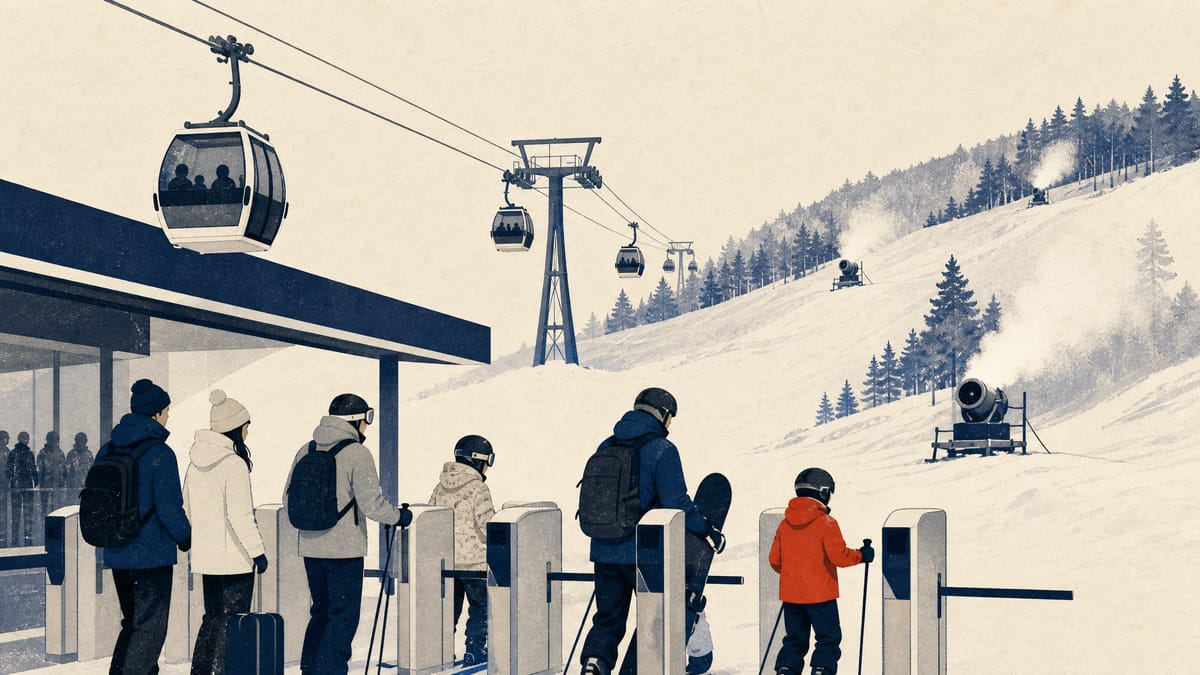
The core ski months were mixed operationally. Natural snowfall and artificial snowmaking let major resorts open around their usual schedule, but warmer weather meant all courses were not open until mid-January. Even so, snowmaking helped keep slopes operating stably into spring, and total winter visits across eight ski areas reached 1.88 million, almost level with the previous season's record 1.886 million.
The standout was inbound tourism. Foreign visitor numbers climbed to 543,000, up 23.3% from the previous record, led by the Hakuba area. The company also said its NSD Kids Program grew to 47,000 members from 44,000 a year earlier, while program usage at group ski resorts was 93,000, broadly in line with the previous season.
Higher spending did some of the work
Management said average revenue per customer rose again after group-wide lift-ticket price increases and higher-value add-ons such as improved food menus, restaurant collaborations and premium services. That helps explain why revenue grew faster than visitor numbers.
For the year ending July 2026, the company left its outlook unchanged at ¥11.48 billion in sales, ¥2.30 billion in operating profit, ¥2.26 billion in ordinary profit and ¥2.47 billion in net profit. It also kept its planned full-year dividend at ¥5 per share, including an interim dividend of ¥1.5 and a planned year-end payout of ¥3.5.
For readers, the message is fairly crisp: regional leisure demand and inbound traffic are still filling lifts, but this remains a seasonal business, and strong nine-month numbers do not automatically translate into a full-year upgrade.