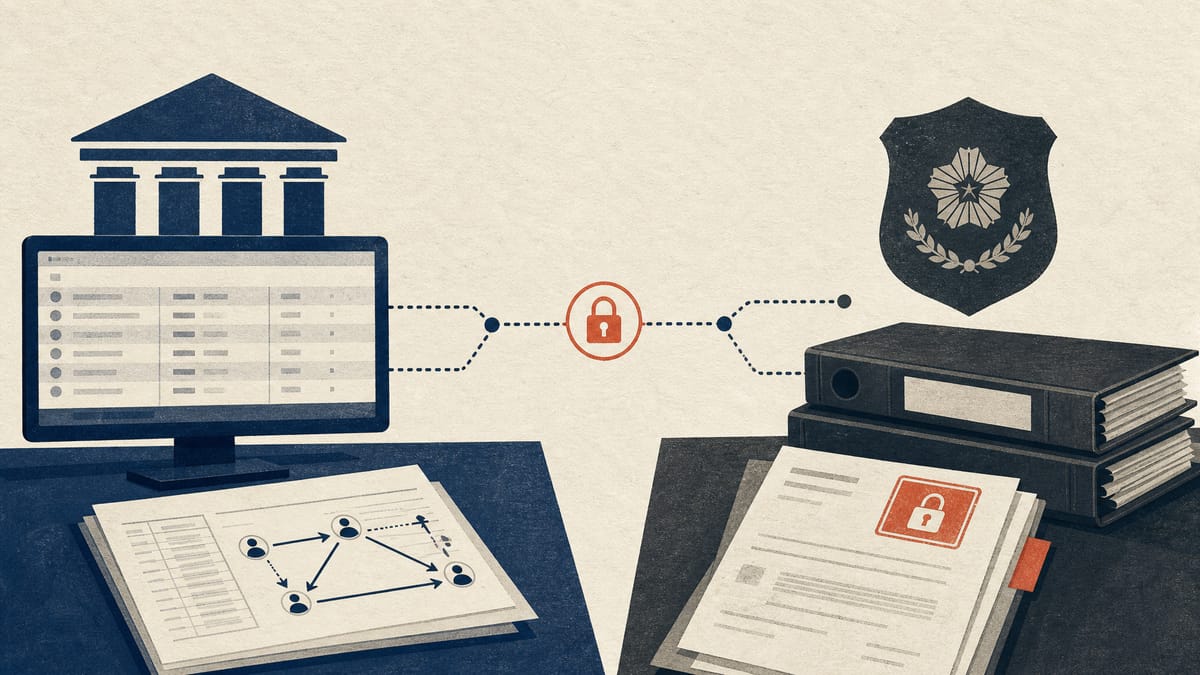
Japan is trying to take some lag out of scam-fund tracing. From June 1, prefectural police will be able to send online inquiries, via the National Police Agency, to participating banks under a new public-private framework designed to trace, freeze and recover money lost to special fraud.
The problem is speed. The authorities say that when victims transfer money into the initial recipient account, criminal groups often move the proceeds quickly into other accounts. Police have been asking banks, sometimes by mailing documents, both to freeze the first account and to identify where the money went next. By the time a reply arrives, the funds have often moved again, making recovery difficult.
The new framework is meant to compress that gap. The NPA will conclude agreements with participating financial institutions, and prefectural police will use the NPA as an online relay when querying those banks. The banks, in turn, are expected to respond quickly. The release says earlier inquiries and earlier freeze requests to the institutions holding destination accounts should improve tracing, freezing and recovery of victim funds. It also says faster tracing should let police start related investigations sooner, with the aim of identifying suspects earlier.
The initial roster is nine banks: Mizuho Bank, MUFG Bank, Sumitomo Mitsui Bank, Resona Bank, Seven Bank, Rakuten Bank, AEON Bank, SBI Shinsei Bank and Japan Post Bank. The notice says the framework begins operating on June 1.
What remains unclear is how much time the online channel will actually save in practice. The announcement does not publish response-time targets, technical details on how the system will run, or a timetable for widening participation beyond the nine named institutions. Still, the business takeaway is straightforward: this is an operational change aimed at shrinking the time between a fraud report, the tracing of downstream accounts and a freeze request. If that window narrows, victims have a better chance of recovery, which is exactly the bottleneck the authorities say the older document-based process has struggled to solve.