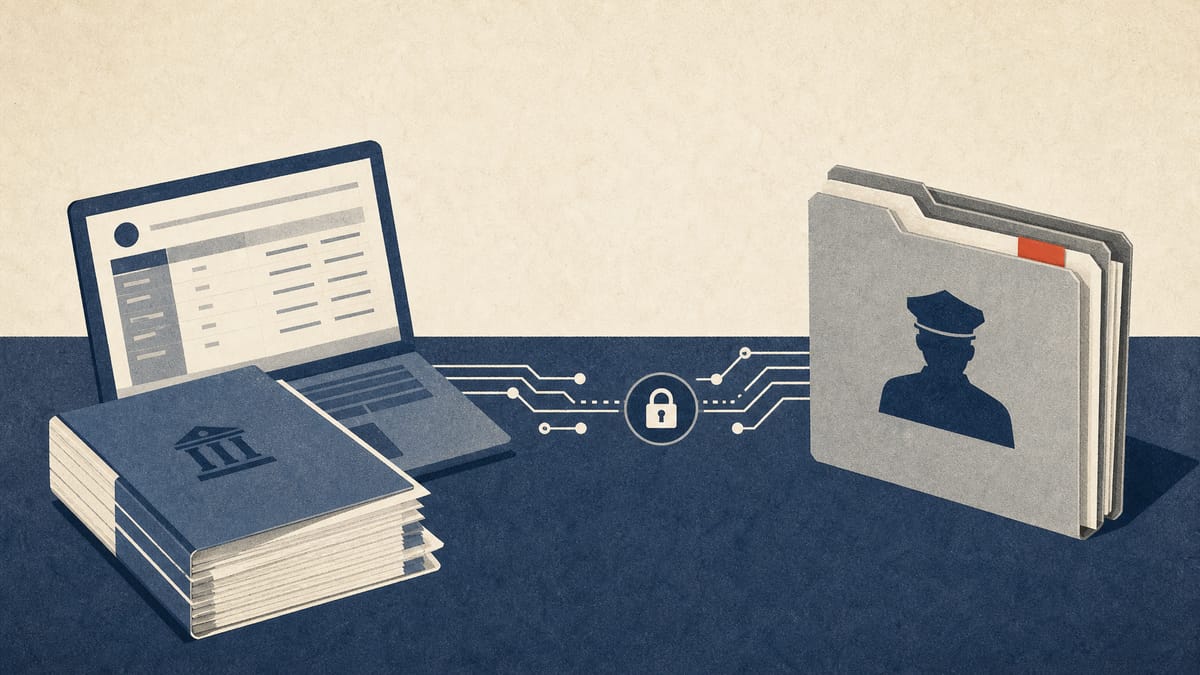
Japan is trying to speed up one of the least glamorous but most important parts of fraud response: finding where the money went before it disappears into the next account. From June 1, prefectural police will be able to send online inquiries through the National Police Agency to participating banks under a new framework for tracing, freezing and recovering funds tied to special fraud.
The change addresses a specific bottleneck. Authorities say that when a victim transfers money into an account used in a special-fraud case, the funds often do not stay there for long. Police have been asking banks not only to freeze the initial recipient account but also, through mailed documents and other written inquiries, to identify which accounts the money was transferred to next. By the time those answers arrive, the funds have often been moved again, making recovery much harder.
Under the new setup, the National Police Agency will conclude agreements with participating financial institutions and act as the online conduit when prefectural police need to trace transferred funds. The idea is simple: reach the bank managing the destination account earlier, request a freeze sooner, and begin investigations into suspects, including cash mules, more quickly. In short, the framework is meant to cut the delay between a victim's payment and the next bank action that might still stop the money.
The first wave of participating institutions includes nine banks: Mizuho Bank, MUFG Bank, Sumitomo Mitsui Bank, Resona Bank, Seven Bank, Rakuten Bank, AEON Bank, SBI Shinsei Bank and Japan Post Bank. For bank fraud teams, that creates a clearer operational expectation that trace-and-freeze requests can arrive through a central police channel and will need a fast response when proceeds have already started hopping between institutions.
What the announcement does not do is prove the model works yet. It is an operational launch notice, not a recovery scorecard. The public release gives the start date and names the participating banks, but it does not publish response-time benchmarks, recovery figures or case-volume targets. So the immediate significance is procedural but real: Japan is replacing a slower paper-based chase with an online one in a type of fraud where speed matters.