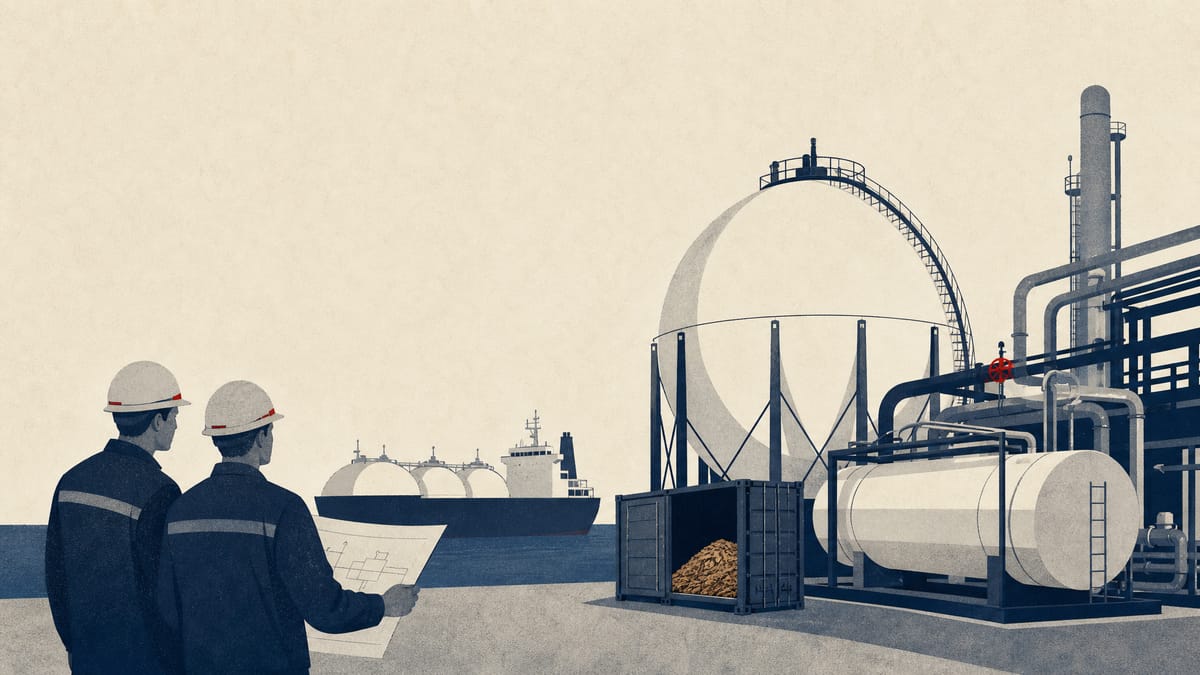
Japan’s latest overseas energy-transition subsidy is not simply a cheque for finished fuel projects. The second application round is framed around earlier-stage work: decarbonising or lowering emissions at base facilities and equipment used by fossil-fuel industries in resource-rich countries, while also supporting the transfer of Japanese advanced technology, surveys and research in fuel areas such as hydrogen, ammonia and biofuels.
That wording matters. The public description says the aim is to create new markets for decarbonised and lower-carbon fuels, then help secure stable and affordable supply. In other words, the program is trying to shape project conditions upstream, in producing countries and adjacent industrial systems, rather than focus only on domestic end-use. The inclusion of surveys and research suggests the scheme is willing to fund groundwork as well as hardware, which is usually where ambitious cross-border energy plans discover their paperwork has opinions too.
The scope is also broader than a pure hydrogen or ammonia push. The excerpt explicitly covers decarbonisation and low-carbonisation of infrastructure tied to fossil-fuel industries in resource countries, alongside fuel-sector work involving hydrogen, ammonia and biofuels. That gives applicants room to pitch projects around industrial retrofits, market development and technical preparation, so long as they fit the program’s stated purpose of building future low-carbon-fuel supply.
On process, the listing says eligible applicants are private organisations that meet the program’s conditions, and consortium applications must name a lead organisation. The jGrants entry shows applications opened on June 1 and close on June 22. It also lists a maximum subsidy amount of ¥1.2 billion, with support rates shown as fixed-amount, two-thirds, or one-half, though the public excerpt does not spell out which project type gets which rate.
For companies, utilities, engineering groups and energy partners in resource-rich countries, the practical takeaway is not that funding has been awarded. It has not. This is a call for applications. But it does show where Japanese policy support is trying to cultivate future commercial links: in overseas project pipelines that combine decarbonisation of existing energy infrastructure with newer low-carbon-fuel chains. The missing details still matter, especially country coverage, scoring criteria and the exact line between survey work and implementation, so applicants and counterparties should check the underlying program materials before treating this as money in the bank.