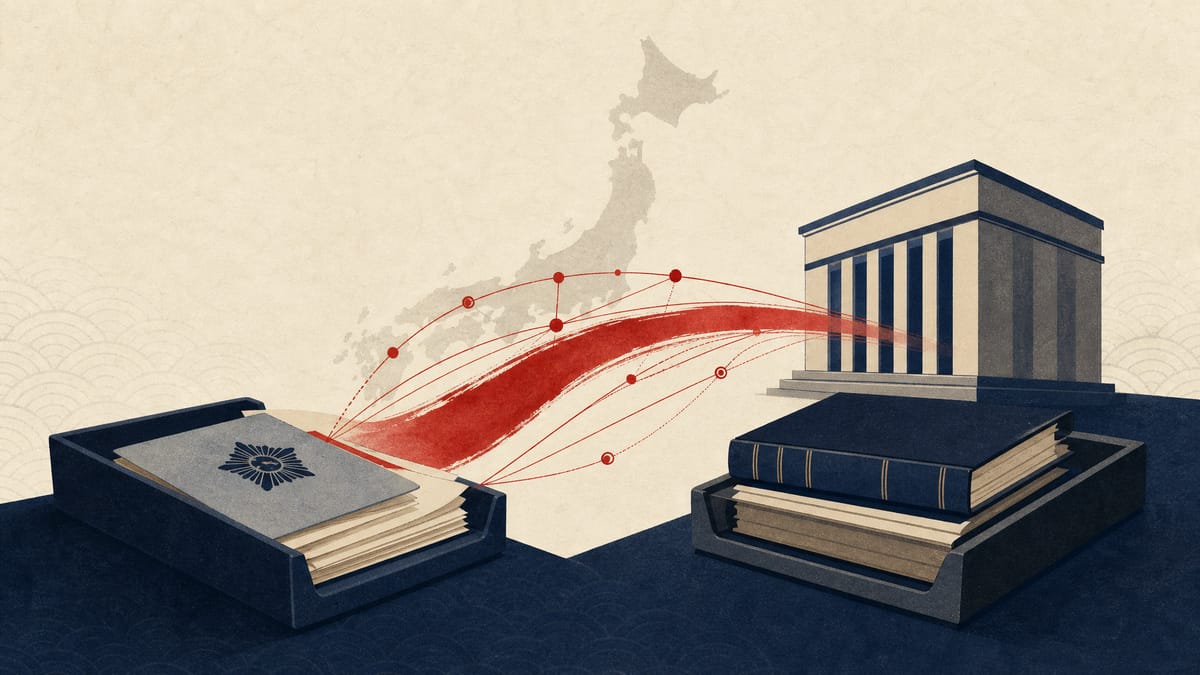
Japan is changing a small but important piece of anti-fraud plumbing. From June 1, prefectural police will be able to send online inquiries to participating financial institutions through the National Police Agency under a new public-private framework aimed at tracking, freezing and recovering funds lost to special fraud.
The problem authorities are trying to fix is timing. In cases where victims transfer money into a deposit account, the funds often do not stay in the original recipient account. The release says criminal groups quickly move the money into other accounts. Police have been requesting freezes on the first account and, separately, asking banks by mailed documents where the money went next. By the time the answer arrives, the funds have often moved again, making recovery difficult.
The logic is simple and slightly grim: the money does not wait for the paperwork. The source describes a process in which victim funds can leave the initial transfer destination account before police receive the information needed to chase the next one.
What changes on June 1
Under the new setup, the NPA will conclude agreements with participating banks and serve as the online relay when prefectural police need to ask those banks about the destination of transferred funds. Participating institutions are expected to respond quickly, according to the release.
Authorities say earlier inquiries to the banks managing destination accounts should help in three ways: tracing the funds, requesting freezes sooner and starting related investigations earlier. That is the core reader payoff here. The reform disclosed this week is not a new slogan about fighting fraud. It is an attempt to replace a slower, mail-based handoff with a digital one while the money is still traceable.
For banks and payments teams, the practical point is that the bottleneck identified by authorities sits between detection and action. Moving inquiries online does not guarantee recovery, but it is designed to reduce the gap between a victim report and a bank response.
Which banks are in the first wave
The initial list includes nine institutions: Mizuho Bank, MUFG Bank, Sumitomo Mitsui Banking Corporation, Resona Bank, Seven Bank, Rakuten Bank, AEON Bank, SBI Shinsei Bank and Japan Post Bank. The framework begins operating on June 1, 2026.
That roster also matters because the release does not present the system as universal from day one. It is starting with named participants, not with every bank in Japan.
Just as important, the online route described in the release is not a direct consumer portal. It is a channel for prefectural police inquiries to participating banks via the NPA. In other words, the operational change sits inside the law-enforcement-to-bank workflow.
What remains unclear
The release is clear on the mechanism and the initial participants, but thin on performance details. It does not publish response-time benchmarks for banks, expected recovery rates, or the current volume of cases where postal inquiries arrive too late. It also does not say whether more financial institutions will join after the first wave, or how results will be reported.
So the immediate significance is straightforward. Japan is trying to make fraud-fund tracing less dependent on envelopes and elapsed time. If the new channel works as intended, police should be able to reach the bank holding a transfer destination account earlier, when a freeze request is more likely to matter. For a policy change built on paperwork, that is exactly the point.