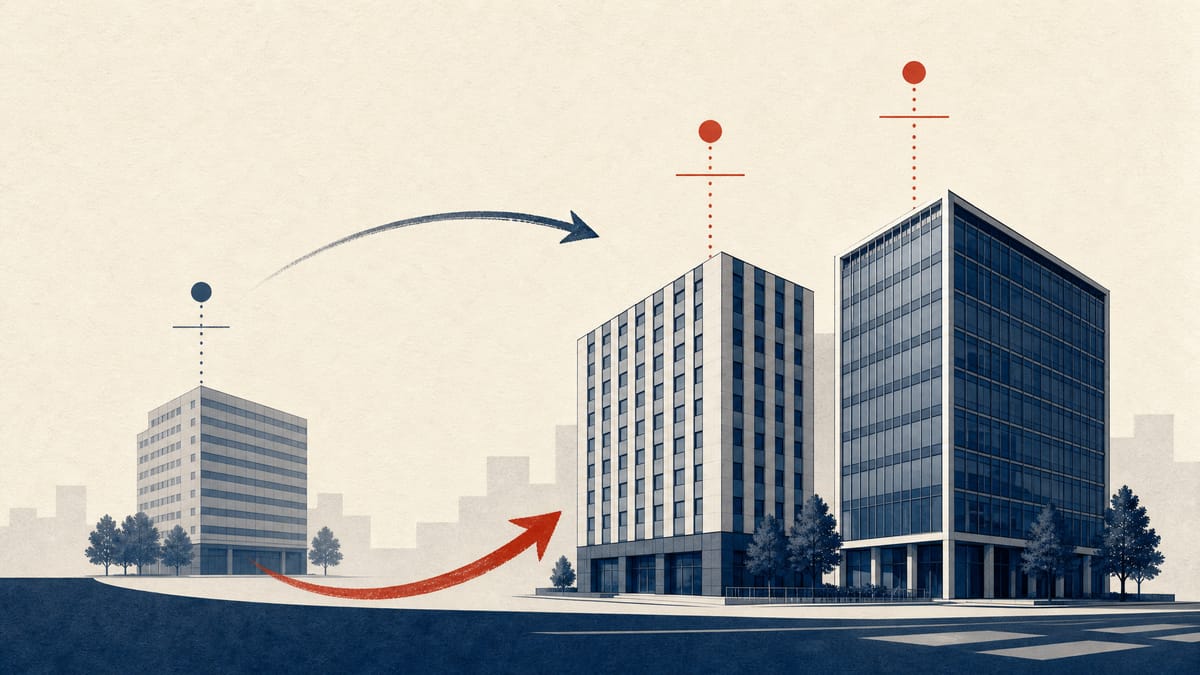
Ichigo Office REIT's latest results are really a capital-allocation story. The trust sold a limited-growth office building in Oita City at 1.7 times book value, booked about ¥519mn of gain, set aside ¥101mn in a dividend reserve, and recycled capital into two office acquisitions in Tachikawa and Funabashi worth ¥5.56bn combined.
| Item | What changed | Detail |
|---|---|---|
| Asset sold | Office building in Oita City | Sold at 1.7x book value, generating about ¥519mn of gain |
| Gain treatment | Part of disposal gain held back | ¥101mn added to dividend reserve |
| Assets bought | Two office buildings in Tachikawa and Funabashi | ¥5.56bn total acquisition price |
| Portfolio after recycling | 87 properties | Total portfolio acquisition price of ¥222.51bn |
That matters because the REIT did not simply turn a one-off disposal into a one-off payout. Its distribution for the period to April was ¥2,376 per unit, down from ¥2,715 in the previous period because disposal gains were smaller, but still ¥102 above the initial forecast. Under the surface, the presentation points to firmer recurring operations: NOI hit a record ¥5.94bn and the company's adjusted recurring earnings per unit rose to ¥2,033.
The operating backdrop helps explain why management was willing to sell a regional asset and lean back into metro-area offices. Ichigo said the two acquired properties sit in areas with stable office demand and future earnings-growth potential. Period-end occupancy held at 97.3%. In the earnings release, the REIT said lease renewals averaged 12.3% rent increases and tenant replacements averaged 23.7% above prior rents. The presentation adds that 86% of new leased area was signed at higher rents.
Put differently, Ichigo is trying to make asset recycling do two jobs at once: realize gains on properties where upside looks limited, and redeploy that money into buildings where rent growth can do more of the work. By the end of April, the portfolio stood at 87 properties with a total acquisition price of ¥222.51bn.
The story is not over. After the period end, Ichigo signed contracts on June 10 to sell four more properties to Sumitomo Corporation, with handover scheduled for July 17. Its outlook for the six months to October 2026 assumes those sales close and forecasts a ¥5,683 per-unit distribution. It also assumes another ¥101mn of property-sale gains will be added to the dividend reserve rather than fully paid out immediately, and no other property acquisitions or disposals through April 2027.
For income investors, the lesson is straightforward: when Ichigo realizes gains, some cash comes back quickly, but some is now being stored to smooth the next round of distributions.