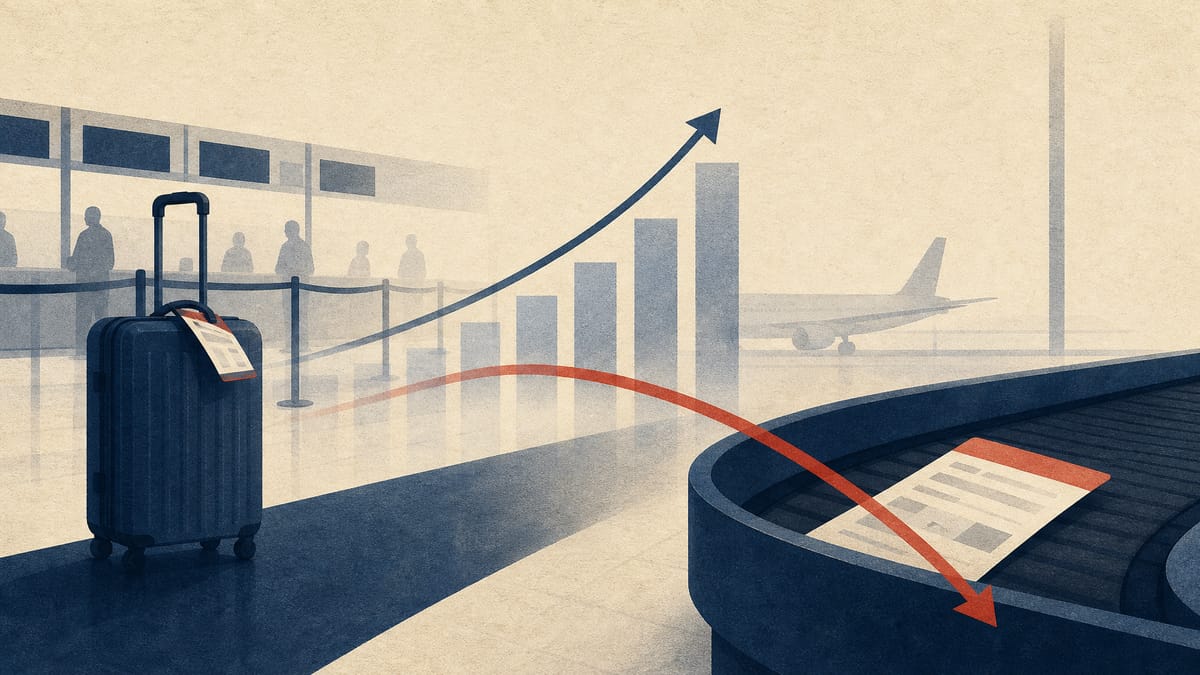
H.I.S.'s latest half-year numbers offer a useful reminder that a bigger travel business is not always a more comfortable one. For the six months to April 30, the group reported net sales of ¥193.132 billion, up from ¥181.313 billion a year earlier. But ordinary income fell to ¥6.197 billion from ¥6.881 billion, and profit attributable to owners of parent dropped to ¥3.0 billion from ¥3.798 billion.
| Metric | Six months to Apr. 2025 | Six months to Apr. 2026 |
|---|---|---|
| Net sales | ¥181.313bn | ¥193.132bn |
| Ordinary income | ¥6.881bn | ¥6.197bn |
| Profit attributable to owners of parent | ¥3.798bn | ¥3.000bn |
| Operating cash flow | ¥1.367bn inflow | ¥3.428bn outflow |
| Cash and cash equivalents, period-end | ¥98.418bn | ¥101.709bn |
The more awkward line is cash. Net cash used in operating activities was ¥3.428 billion, compared with a ¥1.367 billion inflow in the comparable period a year earlier. That does not mean the balance sheet has suddenly gone on holiday. H.I.S. still held ¥101.709 billion in cash and cash equivalents at April 30, and its equity-to-asset ratio was 14.8%, almost unchanged from 14.7% a year earlier. Still, the swing in operating cash flow matters because it shows the revenue recovery is not translating neatly into cash generation.
For readers using H.I.S. as one read on the travel rebound, the message is mixed but clear enough. Sales are moving the right way for a travel group, and period-end net assets also improved to ¥72.368 billion from ¥66.052 billion a year earlier. Yet the period delivered less earnings quality than the top line suggests. Higher sales did not stop profit from slipping, and the move from operating cash inflow to outflow is the kind of detail that deserves more attention than a cheerful revenue number usually gets.
There is also a fresh complication beyond the first-half close. In a separate disclosure on June 12, H.I.S. said consolidated subsidiary GUAM REEF HOTEL, INC. had decided to buy land it currently leases. The company said that will lead to an extraordinary loss of about ¥6 billion in the third quarter because the existing real estate lease will be cancelled. That charge sits outside the six months to April 30, but it gives investors one more reason not to mistake recovering sales for a tidy earnings story.