Digital Grid Corporation, the Tokyo Stock Exchange Growth-listed power and environmental-value trading platform, posted its seventh straight year of revenue and profit growth for the year ended July 2026, then told investors the next year looks less profitable, not more. Revenue rose 15.6% to ¥7.1bn and operating profit rose 10.0% to ¥3.02bn, a 42.4% margin. For the year to July 2027, the company guides to ¥7.97bn in revenue, up 12.0%, but operating profit is expected to fall 5.0% to ¥2.87bn and net profit to fall 17.9% to ¥1.67bn.
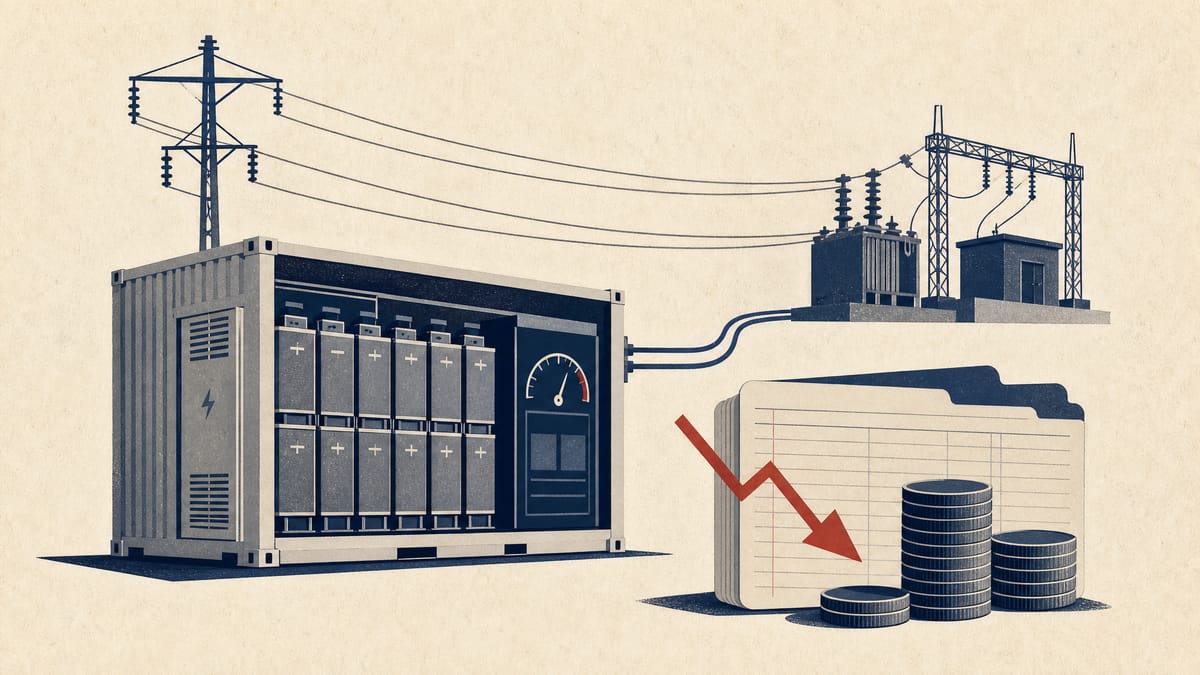
The reason is depreciation. Digital Grid has been buying and holding grid-scale batteries rather than simply operating a trading platform, and tangible fixed assets jumped to ¥4.46bn at the July 2026 year-end from just ¥107mn a year earlier. Management has now cut its medium-term operating margin target to 30%-plus for the year to July 2029, down from the 40%-plus level it had set previously, citing the added depreciation load from the battery build-out. In its place, the company introduced a new metric, adjusted EBITDA margin, targeted at 40%-plus, which strips out depreciation to show what management calls the underlying earnings power of the business.
| KPI | Previous target | Current target |
|---|---|---|
| ROE | 20%+ | 20%+ (unchanged) |
| Operating margin | 40%+ | 30%+ (lowered) |
| Adjusted EBITDA margin | Not previously disclosed | 40%+ (new KPI) |
| Total contracted capacity CAGR (FY27-29/7) | 30%+ | 30%+ (unchanged) |
The balance sheet shows where the money went. Short-term borrowings rose by ¥7.59bn to ¥7.85bn during the year, and total assets nearly doubled to ¥30.8bn from ¥17.8bn. The equity ratio fell to 34.1% from 46.5%, and operating cash flow turned negative at minus ¥1.85bn as rising receivables from higher wholesale power prices tied up cash. Free cash flow for the year was minus ¥6.25bn, with investing cash flow alone at minus ¥4.40bn, largely for battery and construction spending.
Set against that financing story, the underlying trading business kept growing. Total contracted capacity, the company's key volume KPI, rose 38.3% to a record 1,429MW, and the number of contracted companies rose by 249 to 1,497. Monthly customer churn improved to 1.64% from 2.90% a year earlier, and recurring revenue, from platform fees and the aggregation business combined, made up 70.3% of sales. Fee revenue from the core trading platform actually fell 5.8% to ¥4.51bn, which management attributes to intensifying competition compressing per-transaction fees even as volumes grew. The battery aggregation business, by contrast, is the fastest grower: its revenue is guided to more than quadruple, from ¥489mn to ¥2.04bn in the coming year.
Management kept its longer-range ambition intact. For the year to July 2029, it targets consolidated revenue above ¥10bn and adjusted EBITDA above ¥4bn, alongside a maintained return-on-equity target of 20%-plus and contracted-capacity growth of 30%-plus a year. Those are targets, not guarantees, and the company's own disclosure notes that actual results depend on assumptions that may not hold. Digital Grid pays no dividend and forecasts none for the coming year, directing cash instead toward the battery build-out it says will become a third pillar alongside its power and renewable-energy trading platforms.