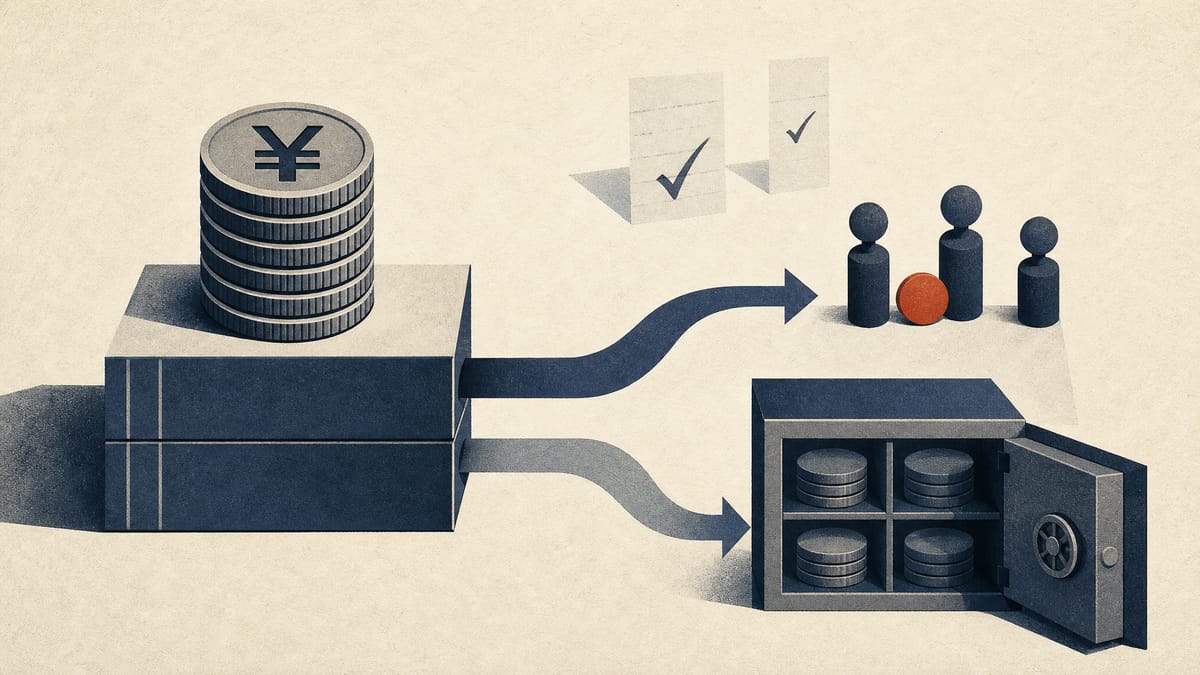
Chiba Bank used its annual shareholders' meeting to do two things at once: send cash out and reshuffle profits inside equity. Shareholders at the June 26 meeting approved a year-end dividend of 28 yen a share, worth ¥19.54bn in total and effective from June 29, alongside a ¥25bn transfer from retained earnings into general reserve.
| Feature | Approved item |
|---|---|
| Meeting date | June 26, 2026 |
| Year-end dividend | 28 yen per common share |
| Total payout | ¥19.54bn |
| Dividend effective date | June 29, 2026 |
| General reserve increase | ¥25bn |
| Retained earnings decrease | ¥25bn |
| Directors elected | 10, including Tsutomu Yonemoto |
| Audit and supervisory board member | Yuichiro Ikeda |
| Proposal 1 support | 99.40% |
| Yonemoto support | 97.13% |
The pairing matters more than the dividend alone. The payout is the obvious shareholder return, but the same resolution also increases general reserve by ¥25bn and cuts retained earnings by the same amount. That means the meeting was not only about cash distribution, it was also about where profits should sit on the bank's balance sheet.
Governance was the other live item. Shareholders elected a 10-director slate that included president Tsutomu Yonemoto, and separately elected Yuichiro Ikeda as an audit and supervisory board member. The first proposal, covering the dividend and reserve transfer, passed with 99.40% support in the disclosed tally. Yonemoto's own election row showed 97.13% support.
What the filing does not provide is a broader capital roadmap. The extraordinary report confirms the legal outcomes of the meeting, but it does not explain why management wanted the reserve transfer now or whether the payout mix will change from here. Investors will need the bank's wider earnings and strategy disclosures for that. This document is the scorecard, not the strategy memo.