Web View
Hitachi says cash first, even in the AI pitch
Hitachi wants investors to admire cash discipline before the AI sizzle, while regulators prod regional banks to model a future that looks less forgiving than the recent past.
MARKETS
Market pulse
Tokyo equities advanced; same-day 10Y JGB data was unavailable.
Sourced from JPX, BOJ - values, not commentary.
lead
Cash before the AI pitch
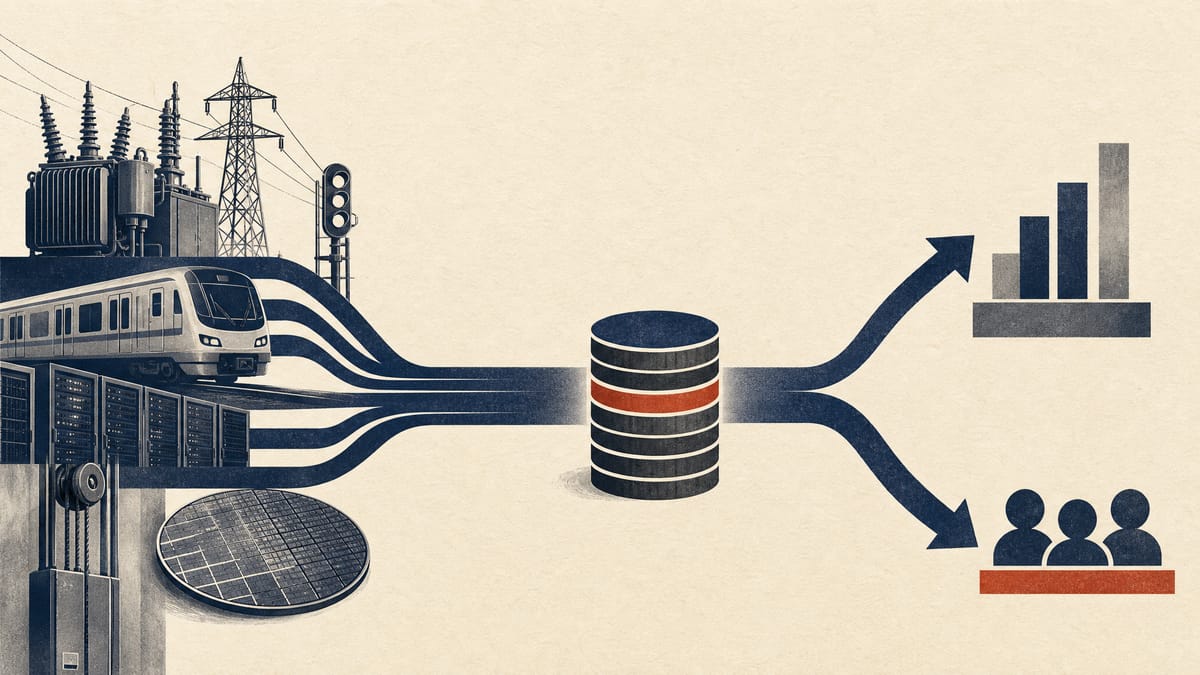
Hitachi wants investors to start with cash, not just AI.
Ahead of its June 10 investor day, the company is telling investors to judge the story on core free cash flow first: the CFO deck shows core free cash flow excluding large advance payments growing at a 28% annual rate from 2024 to 2026, with conversion moving from 83% to 103% and then 100%. It also says at least half of core free cash flow and net income should go to shareholders over the medium to long term, with dividends first, then growth investment or buybacks, then debt repayment. The sector decks are there to justify the discipline rather than replace it. Digital Systems & Services is pitching AI-related sales growth of 20% to 25% a year through 2027, while Energy says it has lifted its 2027 ambitions after record orders and now wants revenue growth of 15% to 17% a year with adjusted EBITA above 14%. These are investor-day materials, not results, but the message is clear enough: Hitachi wants the market to believe tighter capital rules can make a sprawling industrial portfolio look more like a system.
secondary
Policy and corporate moves

The FSA wants regional banks to model a harsher future.
Japan's Financial Services Agency has opened a draft revision to supervisory guidance for small and regional financial institutions, centered on a more forward-looking early-warning system. The agency says deposit volumes at regional lenders are stagnating, and among shinkin and shinkumi institutions the number seeing personal deposits fall has exceeded the number seeing them rise since December 2023. The draft would push supervisors to test earnings and capital plans against demographics, interest rates, future expenses and stress scenarios. It is still a consultation, not a final rule, but the direction is clear: less comfort from recent trends, more scrutiny of whether business plans still work when the locals, and the deposits, stop growing.

Izumi lines up a debt waiver before a subsidiary merger.
Izumi plans to waive an estimated ¥230 million of loans to Bitchu Kaihatsu on Aug. 31 and absorb the wholly owned subsidiary on Sept. 1, saying the unit is in negative net assets. The company said Bitchu Kaihatsu, once the operator of Yume Town Takahashi, is now mainly a real-estate holding and management company after tenant conversion at the site. The waiver should create an extraordinary loss only in Izumi's non-consolidated accounts, while consolidated impact is eliminated. Separate same-day plans to merge three Kyushu supermarket subsidiaries remain only a basic policy for now.
secondary
Results worth your coffee
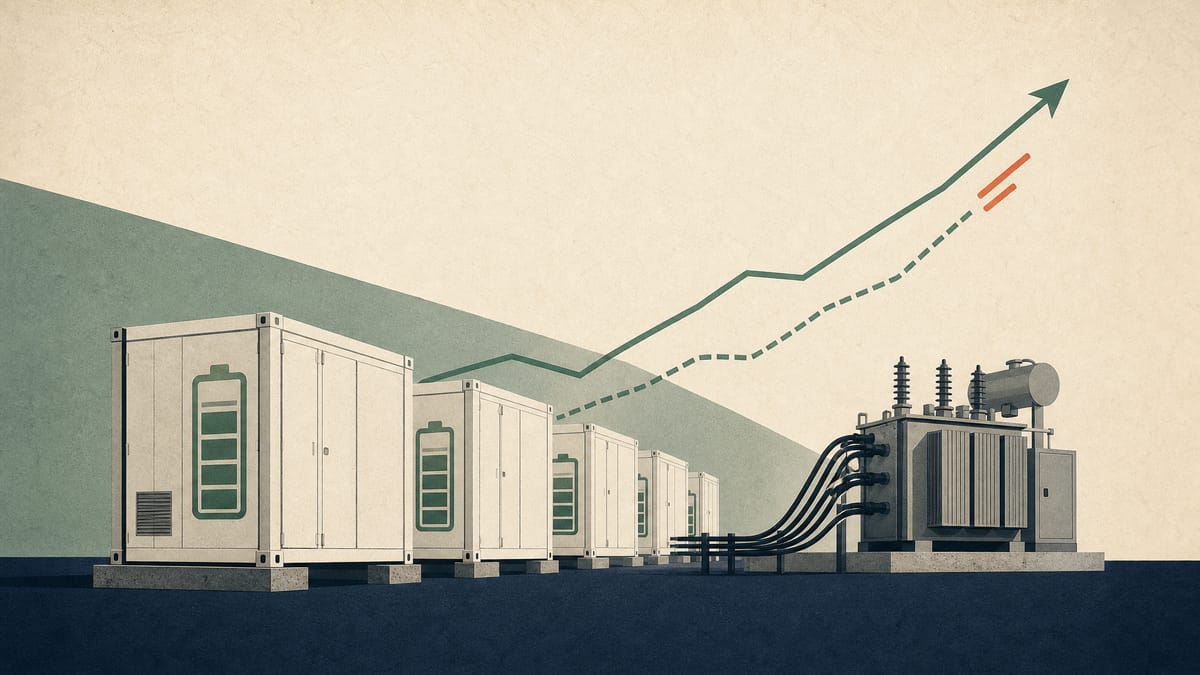
Green Energy gets a battery-powered jump.
Green Energy & Company reported revenue of ¥18,358 million for the year to April 2026, up 58.0%, and operating profit of ¥1,191 million, up 119.3%. Management said grid-connected battery projects were the main driver: the company sold five such projects in the year versus none a year earlier, while O&M and power-generation revenue jumped 290.0% to ¥3,685 million. Operating cash flow swung to a ¥1,318 million inflow from a ¥961 million outflow. The company is guiding for further growth this year, though it notes that utility grid-connection procedures still have a say in the timetable.

Beauty Garage grew sales, then paid the logistics bill.
Beauty Garage lifted revenue 13.3% to ¥38.2 billion in the year to April 2026, but operating profit fell 4.8% to ¥1.52 billion and operating cash flow dropped to ¥553 million from ¥1.42 billion. Management tied much of the squeeze to opening and stabilising the new Kashiwa fulfillment center while old and new logistics sites ran in parallel, and the presentation put the negative profit impact at roughly ¥580 million. The board still kept the year-end dividend at ¥8 a share, taking the full-year payout to ¥16. The company's rebound case depends on that warehouse behaving less like a construction site and more like an asset.
Ishii Hyoki pairs a stronger quarter with a clearer payout rule.
Ishii Hyoki's first-quarter sales rose 12.3% to ¥4.049 billion and operating profit nearly doubled to ¥367 million, helped by AI-related package-substrate demand in manufacturing equipment. Separately, the company rewrote its dividend policy to target a consolidated payout ratio of 30% or more from dividends for the year ending January 2027, replacing a looser framework with no numeric floor. Management kept full-year guidance unchanged. The useful read-through is that better operations are now being matched by a clearer shareholder-return rule, though not yet by higher profit guidance.
Asukanet found profit repair before revenue repair.
Asukanet's sales fell 2.2% to ¥7,102 million in the year to April 2026, but operating profit rose 125.6% to ¥391 million and net profit returned to ¥292 million from a loss a year earlier. Funeral revenue weakened, while photobook margins improved and aerial-display losses narrowed. Management is now targeting ¥10 billion in sales and ¥800 million in operating profit by the year ending April 2029, with M&A and future investment part of the plan. Last year proved the company can clean up the profit line; the next test is whether it can grow it.
Kumi Chemical raises the half-year bar, then books the mess below the line.
Kumi Chemical now expects first-half revenue of ¥102,900 million and operating profit of ¥10,400 million, well above its December forecast, citing pulled-forward agrochemical shipments and solid chemical-product sales. But a separate notice said a subsidiary's chlorination business will record a ¥514 million impairment and a ¥907 million structural reform cost in the February-to-April quarter. The company left its full-year outlook unchanged while assessing Middle East risks. So the operating story improved sharply, but reported profit still comes with attachments.
Arr Planner keeps growing even as housing starts soften.
Arr Planner's first-quarter revenue rose 23.3% to ¥12,635 million and operating profit climbed 53.7% to ¥1,004 million. The company said nationwide housing starts in January to March were 85.7% of the prior-year level after demand had been pulled forward before stricter building reviews, but higher selling prices and a one-stop model across land and homes kept sales moving. Order value also rose 21.1% to ¥14,637 million, according to the presentation, while full-year guidance stayed unchanged. In other words, the company is still outrunning the backdrop, just not declaring victory over it.
Bestera posts a record quarter, but two files stay open.
Bestera's first-quarter sales rose 29.3% to ¥3.27 billion and operating profit jumped 164.1% to ¥353 million, with new orders up 188.5% to ¥3.865 billion. The company kept its annual outlook unchanged, but separately approved total new borrowing of ¥6 billion as larger demolition projects absorb more working capital. A second update on the April accident at a Kawasaki demolition site said three workers died, two were injured and one remains missing, with investigations continuing and the direct earnings impact still unquantified. The operating momentum is clear. The financial consequences of the accident are not.
B&P grew sales, but the cleaner story is still in the second half.
B&P reported first-half revenue of 2,249 million yen, with operating profit down 4.5% to 336 million yen and net profit down 5.0% to 230 million yen. Management kept the full-year plan unchanged and said the second quarter improved as customers stepped up sales-promotion activity before the March year-end, after an early lull and a tough Expo-related comparison. The comparison with last year is not fully like-for-like because of the timing of the Idei consolidation. Still, the message is simple: sales are holding up, profit is softer, and management needs the second half to do more of the work.
quick hits
Quick Hits
Effissimo's Kawasaki Kisen position
Read moreEffissimo said it held 229,086,900 Kawasaki Kisen shares, equivalent to a 35.84% holding ratio, as of June 3. The filing says the trigger was a change to important contracts, not a change in the headline stake, and details pledges, prime-brokerage lines, lending and a 30 million-share trust arrangement around the position.
TIER IV tests a share sale
Read moreTIER IV has begun soliciting overseas institutional demand for a common-share offering and is also contemplating a domestic tranche. The size, split and pricing are still undecided, with estimated net proceeds of 9.8 billion yen to 29.8 billion yen earmarked for autonomous-driving R&D, production and hiring.
ITFOR makes M&A a standing function
Read moreITFOR signed a basic agreement with Sourcing Brothers to form a 90-10 joint venture focused on M&A, corporate venture capital and post-investment execution. Launch is targeted for July, and the company says the near-term earnings impact should be minor.
enish exits Bitcoin, not crypto ambition
Read moreenish sold all 8.063 BTC for ¥79.265 million and said the cash will help fund an active treasury business. Separate Solana-related talks are only that for now, with no launch or tie-up contract decided.
INPIT reopens overseas IP aid
Read moreINPIT opened a June 8 to June 29 application window for subsidies covering half of eligible overseas filing costs, capped at ¥3 million, for SMEs and research institutions. Useful policy tool, though the notice says nothing about likely uptake or award volume.