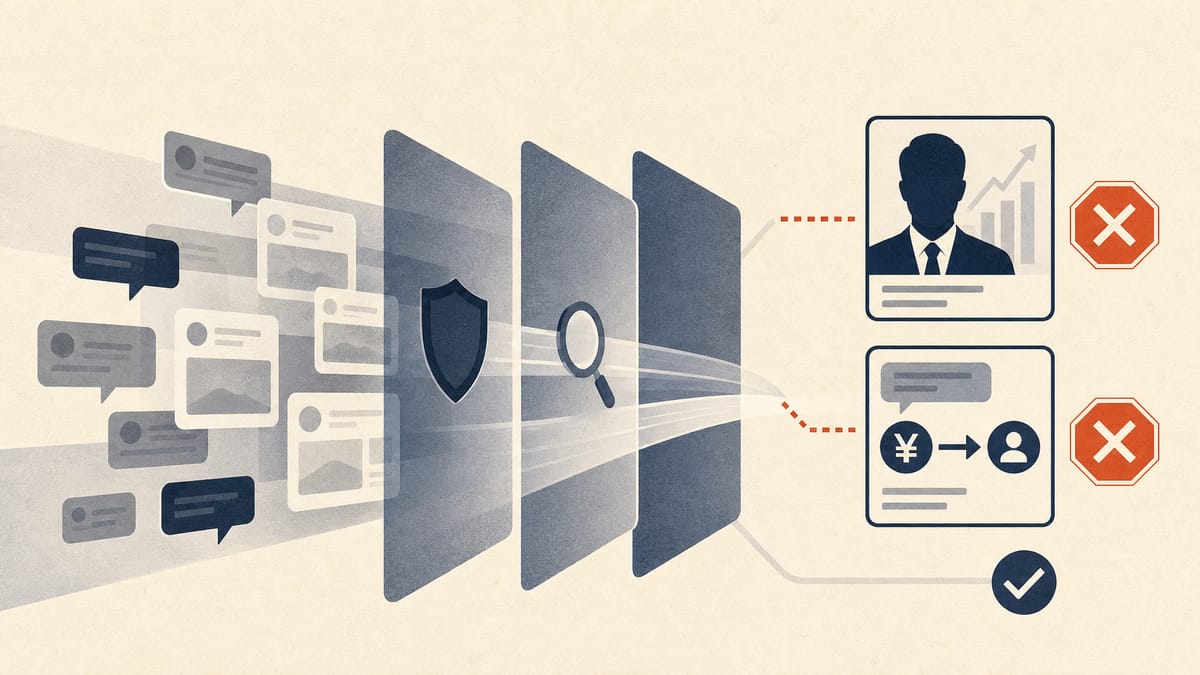
Japan's Ministry of Internal Affairs and Communications has opened consultation on a draft rewrite of its Article 26 illegal-information guideline that would explicitly add two categories to its example list: impersonation-style fake investment advertisements, and requests or inducements for what the draft calls remittance crimes. The ministry says the revision is meant to reflect recent criminal-law changes.
MIC says impersonation-style fake investment ads can fall under an offence in the revised Penal Code, in force since June 2025, involving the use of forged private electromagnetic record documents. The second addition, solicitations for remittance crimes, is tied to the revised Act on Prevention of Transfer of Criminal Proceeds, which the ministry says is scheduled to take effect in July 2026. Both would be newly listed as examples of illegal information in the guideline.
| Proposed addition | Would be listed as | Legal hook in source |
|---|---|---|
| Impersonation-style fake investment advertisements | A new example of illegal information | Revised Penal Code, in force since June 2025 |
| Requests or inducements for "remittance crimes" | A new example of illegal information | Revised Act on Prevention of Transfer of Criminal Proceeds, scheduled for July 2026 |
For platforms, social networks and ad distributors, the practical importance is that the draft gets more specific inside the ministry's example list. A clearer category reference can help compliance teams write screening rules, handle complaints and assess removal requests for ads or posts that impersonate a real person for an investment pitch or solicit a remittance crime. It also leaves less room for category arguments when a scam is dressed up to look like ordinary financial chatter.
MIC says it first set the guideline in March 2025, and the draft PDF shows a September 2025 revision before this new round. The consultation material does not spell out a new platform-specific penalty or provide a clean marked-up extract showing exactly where every example will sit in the full text. That is the key distinction for business readers: the legal hooks sit in the Penal Code and the revised Act on Prevention of Transfer of Criminal Proceeds, while the guideline update is about making those hooks more explicit in the example list intermediaries already monitor.
The proposal is still a consultation, not final text. Comments are open from July 3 to July 16, and the outline says submissions should be made in Japanese, with electronic filing preferred. The draft guideline itself still shows a placeholder revision date rather than an adopted one. For companies that sell ads or host user content in Japan, that leaves a short window to argue over wording before the ministry finalises the text.