Kenedix's asset manager, Kenedix Real Estate Fund Management (KFM), said on July 16, 2026 that it will act as founding sponsor of a new listed real estate trust dedicated to single-family rental houses and row houses, to be called KDX Kolet Investment Corporation (KLT). KFM already runs two other vehicles: the listed KDX Realty Investment Corporation (KDXR) and the unlisted, open-end Kenedix Private Investment Corporation (KPI), together holding more than ¥1.4tn in property across multiple asset types.
To add a third fund without one manager favoring one client over another, KFM is creating a new Kolet REIT Division inside the firm, effective July 16, 2026, to handle KLT's formation and, once it launches, its ongoing operation.
Alongside the new unit, KFM rewrote two internal rulebooks that govern how it splits deal flow among its funds. KDXR's investment guidelines will now explicitly exclude single-family homes and row houses from its target properties. KFM says KDXR has never bought either type and had no plans to, so the change simply closes a gap the old rules left open now that KLT will be chasing the same assets.
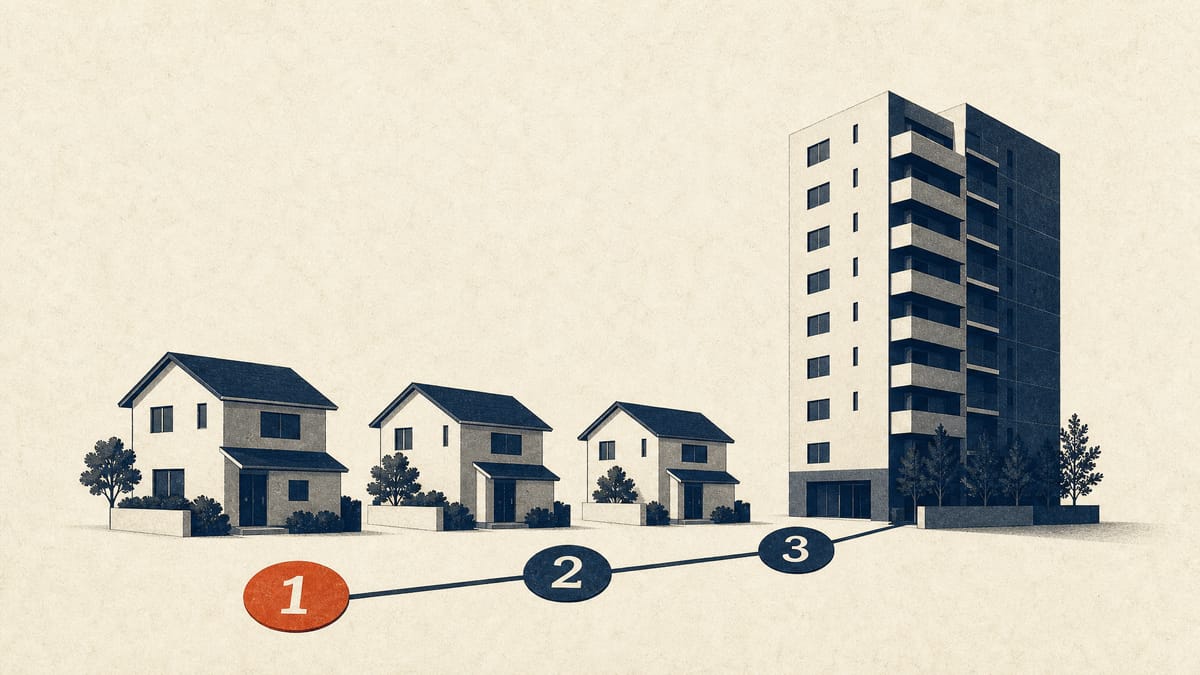
The bigger rewrite hits the Pipeline Committee Rules, which decide which fund gets first crack at a property lead KFM's staff bring in. For ordinary residential buildings, excluding healthcare facilities, single-family homes and row houses, priority now runs three deep instead of two, split by building size and location.
| Property category | 1st priority | 2nd priority | 3rd priority |
|---|---|---|---|
| Tokyo 23 wards, floor area under 2,000 sqm | KPI | KDXR | KLT |
| Tokyo 23 wards, floor area 2,000 sqm or more | KDXR | KPI | KLT |
| Elsewhere in Japan, floor area under 3,000 sqm | KPI | KDXR | KLT |
| Elsewhere in Japan, floor area 3,000 sqm or more | KDXR | KPI | KLT |
KLT lands third in every one of those categories, behind KPI and KDXR. In exchange, it gets sole first-priority claim on every single-family home and row house that comes through KFM's pipeline, a category the other two funds do not compete for.
KFM says the guideline change does not affect KDXR's investment strategy, since KDXR was never a buyer of houses or row houses, and that ranking KLT third on standard apartment buildings means existing shareholders in KDXR and KPI keep their current access to that property type.
What the filing does not say is anything about economics. There is no launch date for KLT, no target portfolio size, and no word on how much capital the eventual REIT will need to raise. Wednesday's disclosure clears organizational and rulebook hurdles before KLT can be formally established; it is not a launch announcement. For now, Kenedix has staked a claim on Japan's single-family rental sector while trying to show, on paper at least, that existing unitholders won't foot the bill for it.