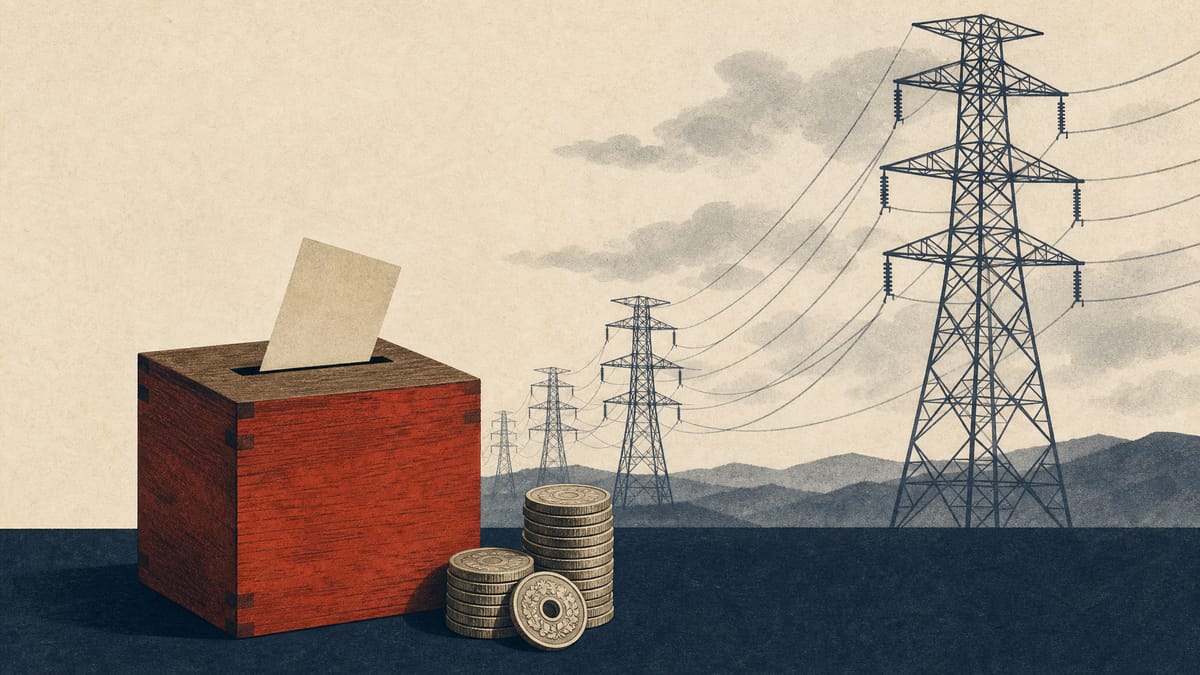
Hokuriku Electric Power's board fended off a shareholder push to slash this year's dividend and redirect the savings toward earthquake relief. The vote also shows that nuclear policy remains a live fight inside the utility's boardroom, one that didn't end with this meeting.
At the company's 102nd annual shareholder meeting on June 25, 2026, holders backed the board's plan to pay a ¥15-a-share year-end dividend, with payments starting June 26, and to add ¥20bn to general reserves. The margin wasn't close: 1,555,577 votes for versus 23,347 against, enough for the board's dividend proposal to clear with 98.0% approval.
That result buried a shareholder amendment asking the company to cut the payout to ¥5 a share, set aside just ¥100mn for reserves, and send the remainder toward relief for the 2024 Noto Peninsula earthquake and lower electricity bills for customers. The motion was defeated alongside the approval of the board's original dividend plan.
Shareholders also tried to reshape the board. Against the company's slate of eight director nominees, holders proposed swapping five names, including president Koji Matsuda, for four alternates. A separate motion sought to replace the company's nominated auditor, Tomiko Mitsuchi, with one of those same alternate candidates.
The larger fight sat in six shareholder proposals to rewrite Hokuriku's articles of incorporation. They asked the company to rule out nuclear power generation entirely and build a network of small, distributed renewable plants instead, withdraw from nuclear fuel reprocessing, strip nuclear operations out of the liability exemptions granted to directors and auditors, add a new disclosure chapter, abolish its advisor and counselor posts, and require individual disclosure of director and auditor pay. None of the six carried. The filing lists only the board's three original proposals, covering the dividend, director slate and auditor appointment, as adopted.
What the filing does not show is how close the nuclear-related votes actually were. Hokuriku disclosed a full breakdown of votes for, against and abstaining only for the dividend resolution. The tallies for the six articles-of-incorporation proposals are not broken out in this extraordinary report, so the precise scale of shareholder support for quitting nuclear power and reprocessing remains undisclosed here. Directors and the auditor elected under the board's proposals take their seats without the liability carve-out for nuclear operations that shareholders wanted, and the company's advisor and counselor structure survives the meeting unchanged.